Blog

  • Summary and comments on debate: William Lane Craig v. Christopher Hitchens, “Does God Exist?”

    I was speaking to a Christian friend lately and so got in the mode of thinking through various arguments about evolution, existence of God and whatnot. I’ve been watching various debates on YouTube on the topic as a refresher, and wrote up some notes on one of them. They grew far too long for a YouTube comment so I thought I’d put them here. I’m not a materialist but I do not believe in a personal God, so I incline more towards Hitchens’ viewpoint. So you’ll see a bit of snark or even contempt on some of Craig’s points. I’ll leave it in for honesty’s sake, but I hope you’ll see that overall I try to be even-handed in how I capture the flow of the debate and my evaluation of aspects of it.

    William Lane Craig’s Intro

    • Starts expressing the wish that Hitchens would prove a negative. Nice one. Misplacing the burden of evidence.
    • Blah blah blah creation must have come from the mind of some super-being blah blah blah – these old arguments for God feel so specious. Is that really the only way things could be?
    • Multiverse in response to fine tuning – I agree, it flies in the face of Occam’s razor, a lot like a personal creator God. Simplest explanation: our universe got lucky!
    • Assumes that atheists cannot believe in objective morality, that they can think of no objection to rape. He can’t be serious. This feels deliberately to misunderstand his opponents, for propaganda purposes.
    • Evidence of resurrection:
    1. A scholar said that accounts of it are reliable
    2. The bible says that people saw Jesus after his resurrection
    3. The bible says that the disciples became completely convinced of the resurrection
      These are a joke. He vastly overstates how “universal” the agreement is that there are no alternate explanations.
    • He asserts that you can know God through direct experience, encouraging people to misinterpret their own thoughts and feelings as coming from outside of them, or maybe I misunderstand him

    Christopher Hitchens’s Intro

    • Past generations of apologists focused more on theological topics; now they focus on rearguard scientific or science-adjacent arguments; so the scientific approach has gained ground over time. The care for evidence by believers he terms evidentialism.
    • The apologetic framework considers how the world could make sense given the assumption that God exists. He calls this retrospective evidentialism. This is all very Bayesian.
    • Tons of extinctions over time, fragility of humanity.
    • Mitochondrial DNA as evidence of human evolution.
    • The escape from Africa to cooler latitudes.
    • So, why would God do it that way? Given an assumption of God, how likely is this process? Why so indirect? Emphasizing the low probability of the universe as we see it given an assumption of God.
    • He catches Craig’s placing the burden of evidence on atheists that God does not exist.
    • His approach: there is no plausible or convincing reason that there is such an entity, and all phenomena can be explained without the hypothesis of a personal creator God.
    • Separates deism from theism. Even if a creator God is required for the universe to exist as we know it, there is a lot of other content in theism which is separate from the creator / universe origin aspect. But the two are conflated generally by theists like Craig.
    • Emphasizes that Craig is trying to prove to a high degree of certainty that God exists; he’s not an agnostic saying “God might exist”; so greater evidence should be required for him to argue his side.
    • Reads from Craig’s book saying that evidence cannot overrule the witness of the spirit. So, the “direct experience” is paramount, and no evidence to the contrary is sufficient to overturn it.
    • Christianity says both that you’re a piece of trash, and supremely, super-duper important. It’s a bit of a tension.
    • “Seek and ye shall find” – could be seen as an encouragement to engage in confirmation bias.
    • Calls out that Craig mischaracterized the scientific understanding of the Big Bang as requiring ex nihilo creation.
    • Heat death of universe – why would a designer do it that way?

    Craig’s rebuttal

    • Back to “there’s no good argument that atheism is true”. Again mischaracterizing the common definition of atheism as “lacking a belief in God”, dodging the need for evidence for God.
    • Says there’s no problem with evolution and Genesis 1 – it can all be de-literalized. Is he responding to Hitchens’s at all? Feels like a canned point.
    • Fine-tuning, anthropic principle, reiterated in more detail. If evolution occurred it was a miracle! He’s advocating the theistic evolution view. Which is sensible if you believe in God.
    • He’s arguing against the idea that God shouldn’t have waited to so long to bring Jesus – did Hitchens make that argument? Hacking at the leaves.
    • He says, no, I don’t need to show a high degree of certainty, only that it’s more likely that God exists. I guess it’s fair, but slightly over 50% probability seems more properly like agnosticism.
    • He says “We’re going to be doing deductive argumentation.”
    • Cosmological argument: he’s going back to his chosen interpretation of the Big Bang as ex nihilo.
    • Fine-tuning: scientists aren’t uncertain about it, he says. Then quotes someone who supports fine-tuning.
    • Heat death of universe: temporal duration of something is irrelevant to whether it’s designed; for example, a computer breaks down over time, and it was designed. But for Christians, the afterlife means nobody cares about the heat death of the universe. I think this is fair. The material outcome of the universe matters more to people who do not believe in a supernatural alternate reality.
    • Quotes N. T. Wright speaking enthusiastically about the “certainty” of the resurrection.
    • Immediate experience of God: is a “properly basic belief”. He keeps using that phrase as if it carries special weight of itself.
    • Therefore, he sums up, there’s more weight on the side of Christian theism.

    Hitchens’s rebuttal

    • I’ve been mischaracterized regarding what atheism is, he says. Atheism probably doesn’t even need to be its own concept; I don’t identify as an unbeliever in tooth fairies, for example, he says.
    • The universe functions without the assumption of God.
    • Say humans are 100k years old as a species. Emphasizes terrors of the unknown in the world, disease, etc. Lots of shortcomings of our physiology due to evolutionary development. We’re getting into problem of evil territory. Mocks the notion of the torment of Jesus being the resolution to the problem of all the suffering in the world. Fair.
    • For God’s super-important plan, it’s strange that so many humans never hear of Christianity, or not from those Craig would approve of, e.g. Mormons.
    • Re: N. T. Wright: supposedly he makes arguments that Christianity is right because it’s been so successful. But this would apply to Islam and Mormonism as well.
    • Morality: you can’t prove that belief in a supreme dictator God makes people more moral
    • Emphasizes that our morality really doesn’t derive from the bible which contains various terrible teachings on slavery etc
    • Emphasizes that atheists also have access to moral intuitions and reasoning
    • Most human morality had developed prior to monotheism
    • Free will: makes a joke, seems agnostic on it; but criticizes the Christian approach as “Of course we have free will – the boss insists on it”, more characterizing of Christian relationship to God as of a subject to an authoritarian.
    • Characterizes heaven as a sort of North Korea, and says he’s glad there’s no evidence that it’s true

    Cross-exam by Craig

    • Atheism as a lack of belief in a deity. He’s seemingly willfully ignorant of or misinterpreting Hitchens’s position. Hitchens reiterates his position that there’s no persuasive evidence of God, then goes on to conclude that God does not exist on the basis of lack of evidence. Hitchens is arguing from absence of evidence. He says he doesn’t agree that we shouldn’t draw conclusions from the absence of evidence, that the claim of God’s existence is so large that it deserves good evidence.
    • Moral argument: the reductive idea that evolved moral sentiments might not have any real moral weight – Hitchens is open to it.

    Cross-exam by Hitchens

    • Do you believe in exorcisms, and devils? The gadarene swine being possessed by devils?
      (With Craig it’s about the righteous-sounding phrases.)
    • Do you believe Jesus was born of a virgin? He says yes.
    • Do you believe the graves were opened on Jesus’ resurrection? He says he’s open-minded, maybe it was a metaphor.
    • Hitchens says others besides Christians have done miracles, exorcisms, etc. So why are Christians special?
    • Do you regard any of the world’s religions as false? Yes, Islam. Is it moral to preach false religion? No. So if Hitchens were born in Saudi, would it be better he were an atheist or a Muslim? Craig takes no position.
    • Are there Christian denominations you regard as false? Calvinism / Reformed.

    Craig again

    • Says Hitchens has not given evidence that God does not exist.
    • Rehashing the percent of population living before Christ. Says God was preparing humanity for Christ to come.
    • Recapitulating prior stuff.
    • Moral argument: without God as a foundation of transcendent moral values, we’re lost in relativism, can’t condemn Nazism, apartheid, etc.
      Insider smarminess in his joke about tithing.
    • Cites a guy who is skeptical of objective morality being possible for atheists.
    • N. T. Wright doesn’t say Christianity’s success makes it true; it was that the resurrection was so un-Jewish, so unexpected, that it’s surprising the disciples accepted it. He concludes (unreasonably in my view) that there could be no other explanation than the resurrection.
    • Sums up with some numbers.

    Hitchens closing

    • Unlikelihood of a thing like that a Jew would accept the resurrection, being a weak kind of evidence. (Exactly!)
    • Mother Teresa as a “Catholic fanatic”. Miracle for her canonization already had (it was 2009) been announced – a supposed healing of a tumor. This will persuade people to seek miracle healing instead of treatment.
    • Seems to be saying that for a Christian to say like Jesus “Father forgive them for they know not what they do” would be blasphemous? Not sure.
    • Apartheid was supported by Reform Church of South Africa.
    • Cites various denominations with close relationships to authoritarian regimes. Vatican abetting fascism, etc.
    • He conflates right-wing Christianity and fascism.
    • Belief in god-emperor in Japan as source of morality.
    • Religion is easier to understand if it’s seen as man-made rather than God-made. To my view this is key. It makes more sense as purely human.
    • He overstates in my view the failures of religion.
    • “Emancipate yourself from the idea of a celestial dictatorship and you’ve taken the first step at becoming free.”

    Craig closing

    • Repeats himself. Atheism is also a worldview. This is fair, if atheism is expanded to include materialism. He says atheism is no more tolerant than Christianity.
    • Asserts there is a creator and intelligent designer, and that there are no objective moral values without God.
    • Mocks the moral sense of pig societies. He seems to be smearing the idea of biologically-derived moral intuitions and practices, since presumably there would be morality amongst pigs as well. Narrow-minded.
    • Closes with a call to convert to Christianity. Of course.

    Questions from the Biola University student audience

    Moderator: there are stupid questions.

    1. @Hitchens: is bible prohibiting bestiality “dangerous sexual repression”? (Ignorant question – can’t imagine other sources of ethics.) Hitchens argues from societal sustainability such as avoiding cannibalism, that a society that persists in it will die out.
      Craig chimes in agreeing with student, that an atheist couldn’t condemn anything in nature.
      Hitchens: it doesn’t help to assume a supernatural authority; there are reasons why homosexuals are so prevalent in society.
    2. @Hitchens: you said bad results of religion discredit belief in God; but atomic weapons were developed by physicists.
      Hitchens: “Physics isn’t a belief system.” He says there are specific scriptures in the bible that encourage evil actions.
      Moderator hits it again on its way over to Craig.
      Craig: cares more about the truth than its social impact. In other words, the utility of a belief is irrelevant to whether one should hold it. (Which I disagree with. It’s even in the bible, “By their fruits ye shall know them.”) There are true ideas that have negative social impact. (Also true.)
      Hitchens: commandment to genocide the Amalekites.
      Craig: grants that it was “nationalistic fervor” that led to the genocidal scriptures.
    3. @Hitchens: what is the purpose of life without a God telling you what to do?
      Hitchens rejects as non sequitur.
    4. @Craig: you have written life without God is absurd, but I know unbelievers who live fulfilling, moral lives.
      Starts against a straw man: the purpose of life is not to glorify God.
      Splits hairs: apart from theism, life is meaningless… he means objectively. Heat death of the universe.
      Calls non-theistic meaning “illusion”. “That’s not really the meaning of your existence, it’s just a subjective illusion.”
      Says who?
      Hitchens: there is good evidence for these things (heat death), he doesn’t like it but doesn’t want to engage in wishful thinking. Religious people prefer power in this world; they also know this life is the only one we’ve got.
      Craig: it’s about whether you have good grounds for believing in resurrection.
      Hitchens: if everything will be set right in the afterlife, why care about what happens here and now, why do churches seek legislation, etc.? Dostoyevsky: “with God all things are thinkable too”.
      Craig: quotes Ivan in The Brothers Karamazov, without immortality “all things are permitted.” Valuing people as ends of themselves, etc., he thinks can only be through belief in God. Churches seek to affect this world because they care.
      Hitchens: there are humanist reasons to care as well; but those who think they have God on their side, what will they not do, convinced that it is God’s will?
      Craig: they are acting inconsistently with their worldview; Jesus would not have been a guard at Auschwitz. Humanism, without belief in God, is just species-ism.
      Hitchens: Auschwitz is the outcome of centuries in which the Christian church blamed Jews for Jesus’ death, bible says Jews called for blood on their heads for generations; it’s a scriptural injunction [to blame the Jews for Jesus’ death].
      Craig: guards at Auschwitz would have been acting contrary to Christianity.
      Hitchens: a large percentage of members of the Waffen-SS were Catholics; they were not disciplined for participating in the “final solution”. (Weird time to interrupt from moderator.)
    5. @Craig: Epicurus: if God is omnibenevolent, omniscient, omnipotent, and doesn’t intervene. (Classic problem of evil.)
      Craig: intellectual vs emotional problem of suffering. (He subdivides.) Is the atheist claiming that God’s existence is logically incompatible with the existence of suffering? Waves hands in air: “no philosopher has ever defined the assumptions that blah blah”. Not a substantive response.

      How could the atheist know that God would not permit evil and suffering? (This is a fair response.) Maybe evil and suffering are actually good for people and help lead them to salvation. He implies, suffering is worth it for salvation; and we are saved at least partly through suffering.

      He pushes for a personal God because Jesus suffers on cross, so… we can relate to him? This is quite Mormony feeling, suffering as valorous. Jesus as a hero who endured suffering, so we can too. Okay, I dig it. But it’s not really an evidence for God?

      Hitchens: office of Devil’s Advocate has been abolished; I’m representing him pro bono.
      If you make the assumption of a deity, then all things are possible, he grants, a backhanded complement.
      Extreme suffering of an imprisoned, tortured woman. Prayers unanswered for 25 years.
      Apologist Doug Wilson said God will cancel all that, all those tears will be dried. (Revelation 21:4) He said “You’re perfectly free to believe that.”
    6. Softball from moderator: why are so many people interested in debates like this?
      Hitchens: theocratic moment; Iran maybe getting bomb; jihadists ruining Iraq, Afghanistan, Pakistan; Jewish settlers stealing other people’s land hoping to bring the Messiah; those who don’t want “stultifying nonsense” in schools in the West.

      Craig: the fruit of modernity. Enlightenment threw off church and monarchy (is he a monarchist???) through reason, trying to usher in a humanistic utopia. Fruit of naturalistic worldview is that mankind is reduced to meaninglessness, purposelessness, valuelessness. And we’re starting to question it. “I’m part of a revolution in philosophy” as scientific, naturalistic, atheistic worldview has been challenged, and theistic worldview reasserted. Beginning to question the assumptions of modernity, bitter fruits of modernity; looking for a “tremendous renaissance in Christian thinking and Christian faith”.

    My conclusion


    Lots of simplistic thinking from Craig; also some real points on his side. Everybody is befuddled by their dualism, both Craig and Hitchens, without acknowledging it. The tendency to reduce everything to material causes either in belief (by Hitchens) or in imagination (by Craig) haunts the convo. But maybe moreso by Craig. Is the biological, the evolved, “just” material? Or is it… material, and subjective, somehow both at the same time in a way that nobody understands? Are our emotions “just” emotions, evolved strings by which impersonal forces puppeteer us? Or are they… evolved forces which influence us, and are part of us, simultaneously? Is the expected dissolution of the universe to dispersed, cold matter quadrillions of years from now really… even… going to happen? That’s a very, very, very, very long time from now, yet it guides the thinking of both men.

    I grew up in Mormonism but have since lost my belief in the religion, and in a personal God. Now, to hear an apologist like Craig, I get an uncomfortable feeling that the focus is not on truth but on being heard to say certain things that give people confidence that their choice to dedicate their lives to Christianity (perhaps in spite of doubts) is the right one, that it is righteous, and those who disbelieve are really kinda dumb and morally deficient, and should choose to believe even if they… don’t believe. Some of the arguments are real, there is genuine uncertainty to the world and to any worldview. But many are specious hand-waving meant to impress believers more than to convince anyone.

    Hitchens I think is too ready to see the natural world in the darkest possible lens, without accepting that we came out of it and are adapted to it. It is our home, as imperfect as we and our bodies and our minds and our societies may be.

    I prefer God to be a metaphor; I prefer Christianity as a language for ethics than as a system of salvation; I find this approach makes more sense, and helps me more in the world, than begging an intervening personal God to alter my life circumstances contrary to causality. I tried as much for decades and think it’s unlikely my prayers were heard by anyone or anything other than my own subconscious mind.

    Is atheism “just” a lack of belief in God?

    A repeated point of contention was whether atheism is its own worldview per se, or merely the lack of a worldview asserting the existence of God.

    If simplistically there are two options, 1) God exists OR 2) God does not exist, then the probability of each is the 1.0 minus the probability of the other. The two concepts are in a sense one and the same. The probability of God existing is exactly the inverse of the probability of God not existing.

    So in a sense Hitchens is wrong to claim that his lack of belief is so different from Craig’s assertion of belief. They are both a worldview, and relate somehow to the observed world, and to the inverse worldview as well.

    Craig is also wrong to say that Hitchens gave no arguments against God’s existence. He did so partly by talking about the related probability of the universe being how it is given that there is or is not a God. (These probabilities are related by way of Bayes’ rule.) By arguing that the world seems more likely given no God than with a God, Hitchens was indirectly arguing that it is more probable that there is no God, given the universe as we observe it. The Bayes’ rule relationship means that increasing P(world | not God) must increase P(not God | world):

    P(not God | world) = P(world | not God) * P(not God) / P(world)

    The conditional also relates in this simplistic model thus:

    P(God | world) = 1.0 – P(not God | world)

    So when Hitchens talks about the likelihood of there not being a God, he is implicitly making a claim regarding the likelihood of there being a God; and when Craig makes a claim that there is a God, he’s also making a claim about how likely there is to not be a God. They’re the same question, if you consider those the only two options.

  • Five Albums from Years Ending In Five

    Five Albums from Years Ending In Five

    For recent birthdays I’ve been selecting albums to represent years in my life. In the first installment, it was 1983, 1993, 2003, 2013, and 2023. The next installment, we incremented a year, so: 1984, 1994, 2004, etc.

    For this year, it was 1985, 1995, 2005, 2015, and 2024/2025 (an album released since my last birthday.)

    Why?

    Partly it’s a way of revisiting what was happening in music over the course of my life. As a kid I lived a very scrupulous form of Mormonism and took adults’ warnings about the corrupting influences of music at face value. This led me to a very narrow set of musical tastes (think symphonic movie soundtracks, 1940s big band jazz, new age synthesizer, and Chuck Mangione) so I missed a lot. Selecting albums from the years of my life is an attempt to reduce the cultural ignorance that’s often a downside of a bookish and puritanical childhood.

    It’s also the anti-Spotify. I gave up Spotify two years ago, in spite of the fact that it had opened the musical world to me when I first joined the service around 2012. Eventually Spotify’s recommendations became a rut. Quitting it was the beginning of an experiment asking whether one can have a rich and fulfilling musical life in the 2020s without the drip-feed rental of a streaming service.

    Process

    The general process is to find lists of albums and listen to them. Wikipedia has articles listing the albums released on many years, and of the top albums by sales in basically any year. Rateyourmusic.com has per-year rankings for any given year, filterable by genre and many other things. I preview albums on Bandcamp if possible, or on YouTube (yes, a streaming service, with an ad blocker). If I like the album, I purchase it either for download or as a CD. (Sometimes a CD is cheaper, or it’s more available.) Bandcamp is by far my preferred place to buy music as they offer downloads of high-quality audio for cheap.

    The artist-album model is a different mode than the currently more prevalent everything’s-a-single approach. Albums are to individual songs what a novel is to short stories: it’s a work of greater complexity, able to take a range of views and moods. It was the main form of prior generations of artists partly due to the physical constraints of vinyl, tapes, and CDs. Yet even while technological development has removed these limitations, the album remains artistically valuable – with a side helping of inviting you to pay attention to a thing for an hour at a time. Shocking!

    I listened to something like 80 albums to select this year’s five. There are probably thousands that could be considered – obviously in a given year a huge amount of music is released.

    Criteria

    There were a few requirements:

    1. That it be new to me. Not necessarily that I had never heard of it, but that I was not previously an appreciator of it.
    2. That it not be too similar to albums selected in other years. (I want there to be diversity of selections across years. For example, not using Prince’s 1985 album because I used Purple Rain for 1984.)
    3. That it was released in the given year.
    4. That it was not produced longer than a year or two before its release.
    5. That it be not much longer than an hour, i.e. not take over the presentation of the set.
    6. That it be great – work musically, and have something that I could appreciate.

    Observations

    I don’t know what to do with music post-2015 or so. It really stood out to me this year that 2015 in particular was a year of deconstruction and stagnation-with-experimentation. Kendrick Lamar’s To Pimp A Butterfly is apparently considered by many the greatest hip-hop album of all time, but it isn’t even pure hip-hop—it’s a portmanteau of hip-hop with jazz, or was it jazz with hip-hop? Not a synthesis of the two genres, but alternating between them. One of the top pop albums of the year, Meghan Trainor’s Title, is sarcastically titled, and essentially a throwback to 60’s doo-wop. Sophie’s Product, another top-rated pop album of 2015 with a snarkily generic title, is so essentialized and self-conscious that it functions as a parody of what a pop album was, or supposedly ideally should be. It’s deconstructed pop. None of these highly influential genre entries takes its genre seriously, or sees working in a genre as quite good enough, at least not any contemporary one. It’s as if there’s nothing left to say musically, so what’s said is either everything at once (jazz AND hip-hop! But not jazz-hop…), or the negation of the value of saying anything at all (pop music suuucks so baaad, baa-byy!), or to repeat (with only slight modification) what was said 50 years prior. This while rock was transitioning into museum piece status, the prior greats in late-career indulgence, and the energy focused on recreating the past. (See also: Brexit, Donald Trump, Joe Biden, and the McRib sandwich.)

    Are the self-aware rejections of genre, the pretentious mashups, and the obsessive longing for what-was a hiccup, a moment of postmodern experimentation whereby we recover the value of shared concepts? Or the farthest growth of the Enlightenment project wherein the leaves curl back on themselves and begin to brown? Clearly, I’m thinking too hard about this. Time for some…

    Selections

    1985

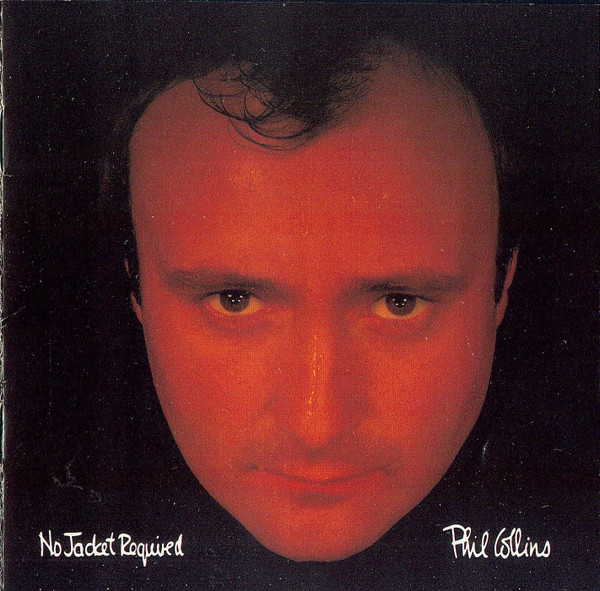
    Phil Collins, No Jacket Required, 18 Feb 1985

    This one is perhaps not going to be a revelation to anyone, but it has much that works for me. First, having recently realized I am a fan of early Genesis (with Peter Gabriel) I have become more interested in the members of that band, including Phil Collins whom I only previously knew from, I think, the soundtrack to Disney’s Tarzan.

    No Jacket Required also has a lot of synthesizer, of a particular kind that I find very pleasant. Perhaps that’s a sign that I was born in this period. Maybe I heard synth tones in the womb, who knows? (Good synth also largely led to my selection of Madonna’s debut album to represent 1983.)

    Others considered for 1985:

    • Sade – Promise – 4 Nov 1985 – really liked it; chill and classy
    • Tears for Fears – “Songs from the Big Chair” – 25 Feb 1985 – it’s good!
    • Kate Bush – Hounds of Love – 16 Sep 1985 – really good, though it trails off toward the end; or maybe I just didn’t get it yet
    • Dire Straits – Brothers In Arms – 17 May 1985 – let’s say it has some homophobic language which is probably why it got covered in Empire Season 1 (2015). But is a pretty fun album otherwise, with some recognizable songs.
    • John Fogerty – Centerfield – 14 Jan 1985 – I remember being bored
    • Prince and the Revolution – Around the World in a Day – 22 Apr 1985 – good but too much like the prior album which was featured last year
    • The Smiths – Meat is Murder – 11 Feb 1985 – didn’t make a big impression; some well-known songs and a chill vibe, might need another listen
    • The Jesus and Mary Chain – Psychocandy – 18 Nov 1985 – don’t remember it, I was playing a game
    • The Cure – The Head On The Door – 30 Aug 1985 – don’t remember much
    • The Replacements – Tim – 18 Sep 1985 – fine

    1995

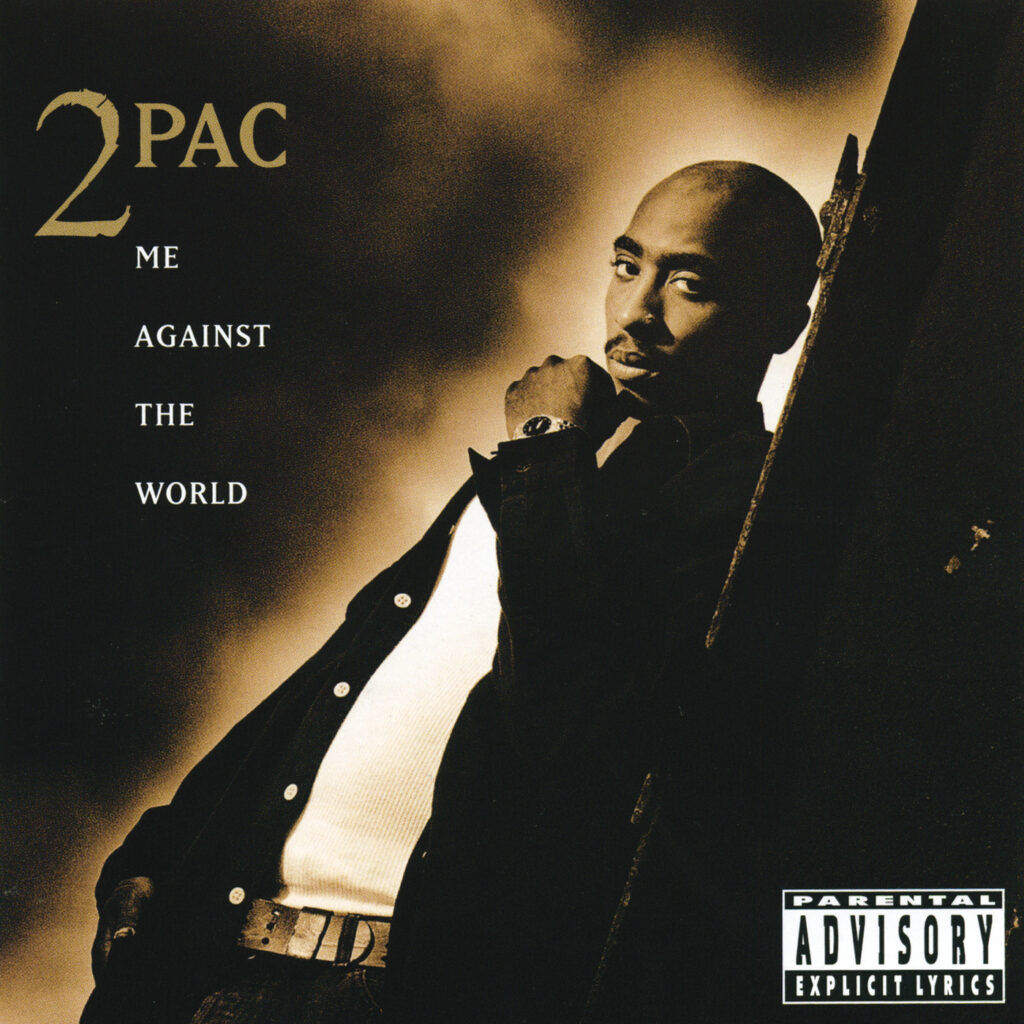
    2Pac, Me Against The World, 14 Mar 1995

    Gangster rap was far from accessible to 12-year old me. Profanity, sex, drugs, violence – there was no way I was going to listen to it, even if my parents had no objection, which they certainly did.

    So what I knew of it was from parody, like Weird Al’s Amish Paradise, and maybe from songs on movies or TV shows. But I never really engaged it. And somehow, with all its recommendations recommendations recommendations, Spotify never got me there.

    My entree into appreciating hip-hop was through Deltron 3030, a sort of space opera rap album recommended by my brother, and still very cool. Next was Hamilton, which I also heard about through word of mouth, because everybody was raving about it. (And it is excellent.)

    Two years ago, I chose Reachin’ (A New Refutation of Time and Space) by Digable Planets to represent 1993. It’s non-gangster rap, I’d say sort of nerd rap, and it really connected for me. But the harder stuff I heard while selecting a 1994 album, I just wasn’t ready for.

    But like the taste of blue cheese, sometimes it takes a few attempts for a novel flavor to stick. And Tupac did it for me. Is the gangster stereotype pretty annoying for black people? Yes. Yes it is. But it also comes from a real experience that’s movingly captured here. Me Against The World is excellent; heartbreaking; channels rage, for sure; it’s tender; it’s inspiring.

    Others considered for 1995:

    • Genius/GZA – Liquid Swords – 7 Nov 1995 – pretty good, really liked the opening, but got a bit samey later, then stronger again
    • Björk – Post – 15 Jun 1995 – it’s good
    • Radiohead – The Bends – 13 Mar 1995 – one of the great albums
    • Pulp – Different Class – 30 Oct 1995 – great. Dirty. I really liked it.
    • Three-6 Mafia – Mystic Stylez – 25 May 1995 – really good. Definitely trashy. Sounded less good over speakers.
    • The Smashing Pumpkins – Mellon Collie and the Infinite Sadness – 23 Oct 1995 – Epic. Getting to know this album was to get to know myself.
    • Soda Stereo – Sueño Stereo – 15 Aug 1995 – bien!
    • Susumu Hirasawa – Sim City – 2 Aug 1995 – really cool
    • Goodie Mob – Soul Food – 7 Nov 1995 – pretty good
    • Raekwon – Only Built 4 Cuban Linx – 1 Aug 1995 – pretty good!
    • Friday (Original Motion Picture Soundtrack) – 11 Apr 1995 – pretty good, less so than 2Pac
    • Pink Floyd – PULSE – 29 May 1995 – lots of good stuff but too long and not really from 1995
    • Tom Jobim – inédito – 1995 (but recorded in 1987) – good! Just the wrong year
    • Mencken/Schwartz – Pocahontas – 30 May 1995 – good, not new to me
    • Death – Symbolic – 21 Mar 1995 – it’s death metal; it’s all the same to my ears; I like some of the guitar work
    • Donkey Kong Country 2 – 1995 – Doesn’t do that much for me
    • Pavement – Wowee Zowee – 11 Apr 1995 – meh
    • Elliott Smith – Elliott Smith – 21 Jul 1995 – not my genre
    • Faith No More – King for a Day Fool for a Lifetime – 13 Mar 1995 – meh, not my thing
    • Guided by Voices – Alien Lanes – 4 Apr 1995 – kinda early Genesis-y. Really short.
    • Blind Guardian – Imaginations From The Other Side – 5 Apr 1995 – occasional moments, but not my genre.
    • Fugazi – Red Medicine – 14 Aug 1995 – not bad, not great, occasional good moments
    • The Pharcyde – Labcabincalifornia – 14 Nov 1995 – meh
    • Cap’n Jazz – Burritos, Inspiration Point, Fork Balloon Sports, Cards In The Spokes… – 1995 – it’s emo, in a bad way
    • Van Halen – Balance – 24 Jan 1995 – meh
    • Bruce Springsteen – Greatest Hits – 27 Feb 1995 – not my thing
    • Michael Jackson – HIStory: Past, Present & Future – Book I (HIStory Continues) – 20 Jun 1995 – some good. Kinda cheesy.

    2005

    Boris, Pink, 12 Nov 2005

    I was surprised how heavy this was, and how much I liked it. As rock gets into its bronze age, non-English music is seen increasingly carrying the torch. Boris is a Japanese band that’s often characterized as sludge metal, noise, and similar, but whose members reject even the general label of “heavy metal”.

    This is probably the heaviest, “dirtiest” sounding rock music that I’ve found myself liking. I have no idea what they sing about since it’s in Japanese. But you get the idea. Just… give it a listen sometime.

    Others considered for 2005:

    • Ryan Adams & The Cardinals – Cold Roses – 3 May 2005 – I like the grittier country-ish sound. Gets rockin’. Really good.
    • Dave Matthews Band – Stand Up – 10 May 2005 – pretty good!
    • System of a Down – Mezmerize – 17 May 2005 – really interesting! I’m not sure, but… in a good way!
    • 50 Cent – The Massacre – not a full listen; makes me think of “American Fiction” haha; I like the sound pretty well but it feels stereotypical somehow
    • Mariah Carey – The Emancipation of Mimi – 12 Apr 2005 – strong opening, but slips into more generic-feeling material, but it’s not my genre; to 16:18
    • Nujabes – Modal Soul – 11 Nov 2005 – maybe another time, I need some non-hiphop next in the lineup
    • Gorillaz – Demon Days – 24 May 2005 – kinda like it, but it also feels too predictable, maybe because of how much later Damon Alburn I’ve heard? to 15:30
    • Nine Inch Nails – With Teeth – 3 May 2005 – I am finding it a bit repetitive. Pretty dark, not my favorite.
    • Audioslave – Out of Exile – 23 May 2005 – pretty good, I did zone out halfway though
    • George Strait – Somewhere Down in Texas – 28 Jun 2005 – nice sound, kinda cheesy, feels like the fake distilled sanitized version of rurality
    • Sufjan Stevens – Illinois – not a full listen; probably not my jam (wasn’t back in the day)
    • Coil – The Ape of Naples – 2 Dec 2005 – not a full listen; I’m not into it

    2015

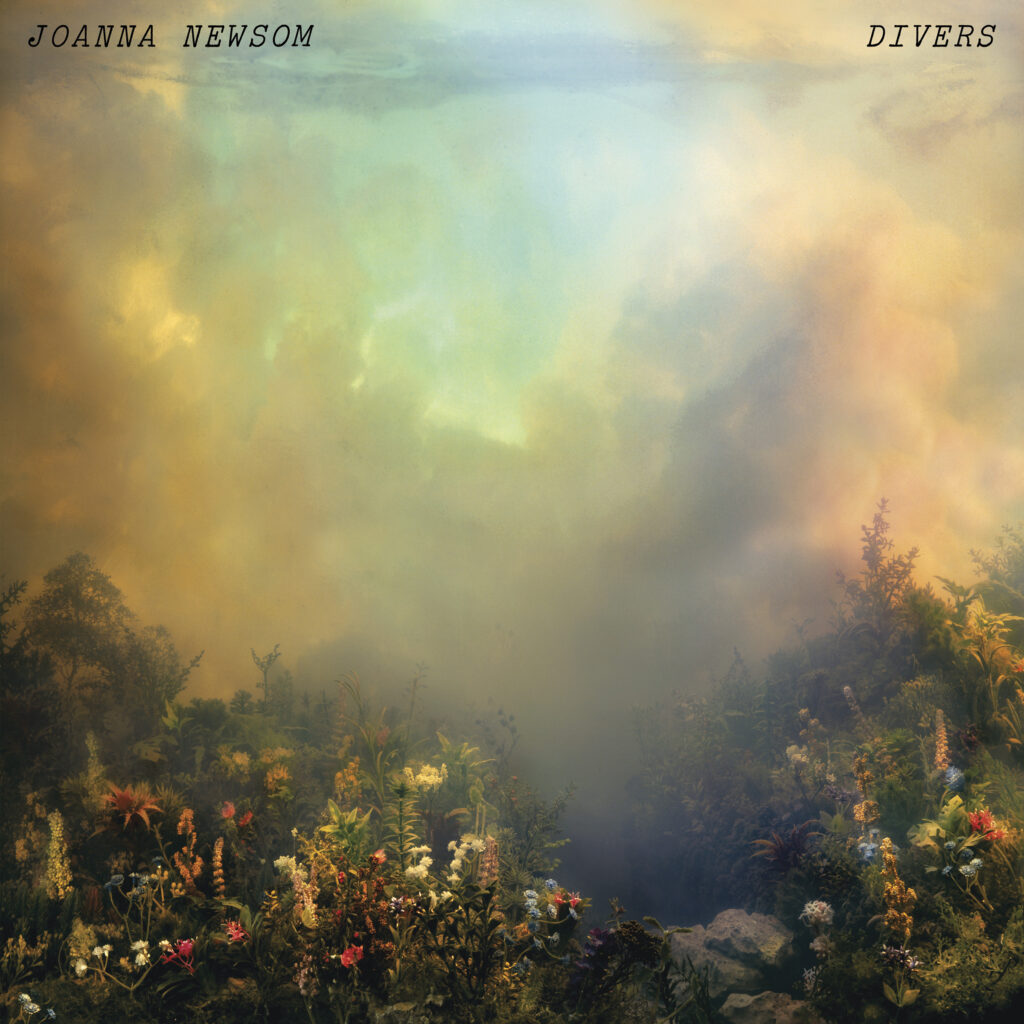
    Joanna Newsom, Divers, 23 Oct 2015

    As mentioned above, 2015 was a tough year for me to find an album for. I wound up with this really nice singer-songwriter entry with an unusual-sounding voice and a 5% pretentious lyrics. (It relates to Ulysses by James Joyce.) Others also went through “bookish and puritanical childhoods” and do pretty cool things from that vantage point.

    Others considered for 2015:

    • Björk – Vulnicura – 20 Jan 2015 – also reviewed Björk Post for 1995, which I was a fan of. Kind of meandering… Good!
    • Fall Out Boy – American Beauty / American Psycho – 16 Jan 2015 – “You look so Seattle, but you feel so LA” – really good!
    • Eliza Soares – A Mulher Do Fim Do Mundo (The Woman At The End of the World) – 1 Oct 2015 – pretty nice, I have no idea what it says!
    • Big Sean – Dark Sky Paradise – 24 Feb 2015 – not too bad
    • Various – Empire Season 1 Soundtrack – 10 Mar 2015 – covers Dire Straits’ 1985 “Money For Nothing” from Brothers In Arms included in this year’s reviews. Pretty good.
    • Kamasi Washington – The Epic – 5 May 2015 – somewhat laborious jazz, but some fun sounds. Feels like 1974 or so. It picks up and is pretty good. Color me skeptical of the Malcolm X rehab. A lot like “To Pimp a Butterfly” regarding Tupac, but a more flattering portrait, papering over the grosser stuff.
    • Kendrick Lamar – To Pimp a Butterfly – 15 Mar 2015 – very jazz-influenced… in a bit of a bad way. Repetitive. On purpose – it could pay off, I’d have to revisit. I’m just not into most of it stylistically; it’s pretty somber. It believes in race quite a bit. And gang identity? I like the messages of anti-victimhood, anti-gang-violence. Very talky. Very class revolutionary and embraces class violence. Prophesies race-based violence.
    • Carly Rae Jepsen – Emotion – 24 Jun 2015 – naaahh, not my genre
    • Sophie – Product – 27 Nov 2015 – ugh, not for me. Like, horror-dance. Kinda shitty, then “deconstructed”. Austere art that’s there to not give you what you want. For masochists.
    • Julia Holter – Have You In My Wilderness – 25 Sep 2015 – not into it
    • Mgła – Exercises in futility – 4 Sep 2015 – nah, not my genre
    • Lil Ugly Mane – Third Side of Tape – 29 Apr 2015 – listened to the first two or three sides, not into it
    • t e l e p a t h テレパシー能力者 – Interstellar Intercourse 星間性交 – 21 Dec 2015 – I guess people use this while having sex. For just listening to? Not my thing.
    • Earl Sweatshirt – I don’t like shit, I don’t go outside – 23 Mar 2015 – a drag
    • Jeff Rosenstock – We Cool? – 25 Feb 2015 – I really dislike the faux-dorkiness of this sort of punk. Some good guitar.
    • Meghan Trainor – Title – 9 Jan 2015 – I’m not the target audience, obviously. Some nice messages of self-acceptance, but also in a bit of a vapid and resentful way. The music itself is very basic – feels like parody almost; the album title ‘Title’ fits. Pretty confessional about some bad habits, so relatable, but also normalizing some dumb shit. I sound for sure like a dad right now. Very high school / early college.
    • Drake – If You’re Reading This It’s Too Late – 13 Feb 2015 – dislike. There were maybe two songs that I kind of liked, the rest… no thanks. Stylistically, and personally. I just feel like I wouldn’t want to hang out with the guy.
    • Imagine Dragons – Smoke + Mirrors – 17 Feb 2015 – Fine, doesn’t do that much for me – maybe I’m just burned out
    • Kelly Clarkson – Piece by Piece – 27 Feb 2015 – okay, pretty overplayed on this first track. Kinda cheesy. Not my thing.
    • Death Grips – The Powers that B Disc 2 – 19 Mar 2015 – meh
    • Travis Scott – Rodeo – 4 Sep 2015 – also meh, really not my style

    2024/2025

    Jack White, No Name, 19 Jul 2024

    The rule was to be released in the 366 days following my birthday in 2024. (366 to account for leap year.) I didn’t do a general search but kept on eye on Wikipedia’s lists of 2024 albums and 2025 albums.

    I also didn’t search too hard because I loved the hell out of No Name as soon as I heard it. Is rock declining? Maybe it’s being kept alive by work like this. I’m not sure it paves new ground, but it keeps a wonderful tradition vital. Isn’t that the norm for music in human history?

    The White Stripes’ Elephant was my choice for 2003, so apparently I’m a sucker for Jack White’s music.

    I did less of a search process and more just followed along as the year progressed. Other albums considered:

    • King Gizzard and the Lizard Wizard – Flight b741 – 9 Aug 2024 – I really dig it. Like No Name, it sits at the junction of blues and rock, apparently a sweet spot for me. I’m not big on the band’s prior albums, this one being a stylistic anomaly and more of a throwback. Another sign of the backward-looking tendency in rock, and in fans like myself seemingly
    • Glass Animals – I Love You So F***ing Much – 19 Jul 2024 – didn’t do a lot for me, feels too derivative of prior successes
    • cóclea x canut de bon – No esperan por nadie – 10 Jan 2025 – rocks pretty well. Pretty good. Chile is keeping the fire alive.
    • Mac Miller – Baloonerism – 17 Jan 2025 – not too bad
    • The Weeknd – Hurry Up Tomorrow – 31 Jan 2025 – eh, I’m not a big fan

    Concluding Stuff

    Splicing this music search process onto my birthday parties has been an experiment. I’m not sure it really pays off for my guests, but what I was attempting was to somehow bring the inward experience of hearing this music to my connection with other people. The old yearning for the interior and exterior worlds to be joined somehow. I do get a lot of that from the poetry and wider writing world, but music was my first love. Maybe that means I need to go to more concerts. Or maybe I need to work on some chords and start playing again. Did you know there are 4095 possible sequential scales with no repeats in a 12-tone music system?

    Is this a good way of exploring music? I’d say… definitely, yes. Spotify was a little too sanitized for me. Its recommendations had a tendency to keep you where you already were. Being forced to go to multiple sites for information on music and bands also makes for a richer experience – I don’t just get the artist, album, and track name in isolation in some playlist, as fun as that can also be. And I like knowing that, versus a streaming subscription, the vast proportion of my money is going directly to the artists in question (through Bandcamp) or at least (when buying a used CD) helping support the market price of the artists’ music. Is it harder? Yes. Harder, but better for what I’m currently looking for.

    Catch you later.

  • City water caused my acid reflux; filtering eliminates it

    City water caused my acid reflux; filtering eliminates it

    For over a decade I’ve had on-and-off heartburn. But mostly it was no big deal—just one of those discontents of modernity—until a few years ago, when out of nowhere I started to have acid reflux.

    Not just any acid reflux—it was nasty. I’d wake up with pains shooting through my entire body. Or not be able to fall asleep at all. I’d have to sit up completely upright, and sometimes wait a bit, for it to subside.

    I was really worried about it. I’d go running and seemed to feel my damaged esophagus as I ran. In the spring I scheduled an appointment for an esophagogastroduodenoscopy—for a gastroenterologist to send a camera down my throat to see what was going on.

    But then I took a trip to Mexico. And, as one does in Mexico, while there I drank only bottled water.

    After the first few days I noticed that I had no acid reflux. For the rest of my two weeks there I had no reflux. It was very noticeable.

    When I got back to Seattle, I cancelled the endoscopy appointment. It was clear that some difference between my life in the U.S. and how I lived in Mexico for a few weeks was causing my reflux.

    At first I tried to keep as many things as I could the same. I ate Mexican food; I drank water out of large bottles like the garrafones used in Mexico; I slept on the couch instead of in my bed.

    Over time I returned to my more usual cuisine. And I started sleeping in my bed again. No reflux. I switched from bottled water to filtered water. No reflux.

    Except… I still did have occasional nights. Like one night in a month.

    And I’ve realized that it always correlates to when I drink water from a source I don’t know is filtered, such as water from a cafe, or times when I’ve cooked using tap water.

    When I cooked using filtered water, I had no issues.

    That convinced me: it’s the water.

    Seattle’s water comes from the Cedar River and, according to Seattle Public Utilities, is treated thus:

    • Screened to remove debris
    • Chlorinated to remove microbial contaminants, such as bacteria and viruses
    • Fluoridated for dental health protection
    • Ozonated for odor and taste improvements and Giardia control
    • Disinfected with ultraviolet light to disable microbial contaminants such as chlorine-resistant Cryptosporidium
    • Supplemented with lime for pH adjusted corrosion control to minimize lead leaching in older plumbing systems.

    One of these treatments is likely what my body is reacting to. And it’s almost certainly the chlorination: not only do I clearly smell the chlorine in the water, but my Brita filter is capable of removing it, but not fluoride.

    One anomaly is that cooking with tap water seems to cause the reflux. Seattle City Utilities say they chlorinate with “‘free chlorine’”, as opposed to chloramines, so in theory it should be removable by boiling.

    I suppose the rate of degassing of chlorine while boiling lentils is a question as yet unexplored by science. Or perhaps the chlorine remains dissolved in water absorbed by the legumes.

    Another possibility is that it is not the chlorine itself, but one of the many hundreds of possible disinfection byproducts, or perhaps another contaminant also removed by an activated charcoal filter (or by sitting in a filter pitcher for hours) that is causing my reflux.

    But for now, I’m glad to have found a way to eliminate this terrible problem. It hung like a cloud over my life, and to find a resolution to it has been a wonderful thing. That’s why I find myself writing about my digestive woes on my blog: to share what has been a revolution in my health, and such a simple thing, in case it helps someone else.