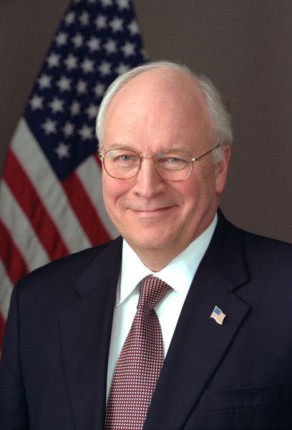
 VS?
VS? 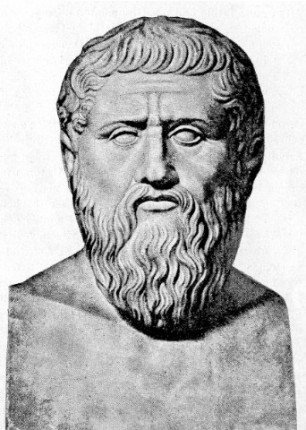 VS?
VS? 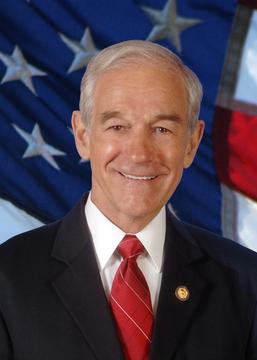
After last night reading two disheartening Washington Post articles about the Vice President’s twisted policies, I was interested to learn about Ron Paul. I thought I remembered someone I know mentioning him as a favorite when he watched the debates, so could Mr. Paul be the Messiah candidate who will come to save the Republican party?
Sadly…
I’m afraid the answer is no. At least, that’s my view. As we know from the New Testament, one person’s expectations of a Messiah can be quite different from someone else’s. But to me, he would represent a step backward from the ideal. In some ways, maybe not as far backward as currently, but in other ways certainly more so.
Here’s a summary of his platform from his most recent blog post on the official Ron Paul website:
I talked about all our ideas: marching out of Iraq just as we marched in; no more meddling in the Middle East; bringing the troops home, from hundreds of expensive bases all over the world, so that we could have the money we need for the transition to freedom in social programs, and to abolish the personal income tax and the IRS. They are not compatible with a free society.
In a Ron Paul administration, we would also repeal the Patriot Act and the Military Commissions Act, restore habeas corpus and stop the spying on Americans. No more eavesdropping on our emails and bank accounts, our phone calls, home and businesses. No national ID—just the bracing freedom of the Constitution.
We must have sound money, and not a giant counterfeiting machine called the Federal Reserve that causes recessions and inflation. We must have private property rights, with no pollution or other attacks on property. We should enforce the Second Amendment, and all the Bill of Rights. We can have privacy for us, not secrecy for a corrupt bureaucracy.
It is all within our grasp, the restoration of the republic and our sovereignty—no UN, no North American Union, no Nafta, no WTO, no World Bank, no IMF. Just federalism, free enterprise, peace, prosperity, and the kind of future we all want for our families, ourselves, and our fellow Americans.
The dream can be a reality. You can help make it so. … Instead of wars and inflation and spying and poverty, we can have peace and freedom and the blessings for our children and grandchildren of doing better than we have, of secure retirements and childhoods. No more theft… of our savings or our liberty.
A Tiny Parcel of Common Ground and The Death of Free Trade
Some of these things sound great. I’m all for privacy. After learning enough about the abuses of various totalitarian governments, it’s clear that the dangers of not protecting the privacy of individuals are quite substantial. I’m all for treating prisoners in accordance with the Geneva Convention—that means the CIA must come into line as well as the military. I’m a “no entangling alliances” kind of guy in many ways, but frankly the congressman’s desire for free enterprise and prosperity is in some ways at odds with his will to abandon the WTO.
And, bailing out on the IMF surely won’t bring financial solvency to the Third World nations that are helped back onto their feet through its loan program. Of course these organizations suffer from corruption and mismanagement, but they also seem to have some legitimate functions such as reducing trade barriers and enabling governments to move their populations out of poverty. Perhaps we should reform rather than abolish.
Can people not understand that the lowering of trade barriers as enshrined in the WTO is one of the great sources of our present prosperity? Yes, even globalization (the ‘g’ word, I know) is part of our current success. Not only that, but it helps bring greater prosperity to people around the world.
Other Bad Ideas: The Gold Standard?
Additional atrocities of policy include abandoning Iraq all at once. Throw in the closure of other bases around the world and all of a sudden a picture of self-centered isolationism emerges. Let’s just enjoy our prosperity, keep it all to ourselves. Another component seems to be the dismantling of the federal reserve. WHY? Should people barter in goods and services when there’s no longer anybody regulating the value of the dollar? Are we going to switch back to the gold standard? Check this from The Daily Paul:
Question: You support returning the countryâs currency back to the gold standard. Is that correct?
Ron Paul: Not exactly. I’m for supporting the Constitution, and the Constitution still says only gold and silver can be legal tender. … The reasons I don’t like to say “go back” is because there were shortcomings in the original gold standard. What I reject, and the founders totally rejected, was a paper standard—creating money out of thin air. Spending money you don’t have. Printing it up. Causing inflation. Causing bubbles. Causing recessions. And wiping out the middle class. The middle class is getting poorer as the wealthy class is getting wealthier. [The advertisement for “The Federal Reserve: Fraud of the Century” at the top of the page sort of scares me. Upon the back of this “fraud” is built an innovative, lively economy. Dear Google, your 172 billion dollars of market capitalization are “fraudulent,” so look out!]
Okay buddy, you go find the political will and the budget to purchase 600 or 700 billion dollars worth of gold to back the currency. Please, could every politician and presidential candidate take Economics 110 from Dr. Kearl? Some things, like gold, have inherent value due to their scarcity. Other things, like the dollar, have a value because society has agreed that it can be used in exchange. Really, in some ways it’s more secure to let the value of the dollar float. What if it was pinned to the value of gold, and suddenly a vast gold deposit was discovered in the middle of, say, Oklahoma? The value of gold would drop in proportion to the size of the deposit, causing a sudden inflation of the dollar as its purchasing power diminishes. And, wiping out the middle class? I don’t know about you, but I’m still feeling pretty alive. Yes, the rich get richer, but in addition, the middle class are very often becoming part of the rich. I guess if you wipe out the middle class by making it too prosperous that’s not terrible.
Mr. Paul should also remember that price fluctuations and economic bubbles were definitely a reality of the American economy under the gold standard. Here’s a friendly chart from Wikipedia.
Please Don’t Go Down That Road
The man’s interpretation of the constitution is simply too strict. If he wishes to restrict our currency to gold and silver, then I suppose debit cards and checks won’t do? Most of the “money” in circulation in the country, perhaps even in the world, is not cash or even necessarily linked to cash. Loans from the federal reserve and between banks, personal checks, etc., allow our economy have a 6 trillion dollar volume when we actually have less than one trillion dollars in physical currency circulating. I’m glad that our economy is flexible enough to prosper! I suppose I put a little bit too much confidence and trust in our economy. The other evil is failing to understand it, trying to fix what “ain’t broke,” and thus seeking salvation from an unknown danger (is our economy faltering?) by means that will likely cause serious damage.
Abolition of personal income tax and the IRS: How will the activities of the government be financed? Who will collect taxes? Besides, the constitution as currently amended specifically authorizes Congress to levy an income tax. How is this incompatible with a free society? Of course, I do think some radical reform of tax laws might be in order. But we still need to have tax laws. As much as people despise paying taxes, it seems to keep the lights on, the universities funded, and the troops more or less equipped. I’m okay with that.
That Lot of Clowns, That Menagerie…
So I’ve ripped into Ron Paul pretty heavily here. I’m sorry for the violence, but it helps me to see where I stand with regards to at least one member of the coming wave of presidential contenders. You know, maybe I’ll make a series of it. I’ll do an analysis of all of the candidates one by one, so that by November 2008 I’ll know whose policies I can find enough agreement with to vote for. So far, I’m seeing nobody that I could really feel 100% or even 90% good about. But, maybe I just don’t know their platforms well enough. So maybe I’ll get up the energy to write similar reviews (critiques?) in the future.
I hope that this hasn’t been offensive if any of you are committed Ron Paul fans. I also hope that through all of the scathing words you’ve been able to find something insightful. This post also gives a bit of a feel for my frustrations as far as politics. My lament could be summed up in one line, which some of you should connect with Plato’s The Republic:
