I haven’t talked much if at all about the LDS church on my blog since ceasing my participation with it. I have kept waiting for the right time to do a grand update to explore all the nuances and really do such a massive change justice. But really, if I ever wrote that, it wouldn’t be a blog post, but rather a book. So, barring that, I’m going to just start giving some updates on where I’m at with things now, and while that might not give all the desired details and background, it will at least keep you (and me) from falling farther behind!
For those just getting up to speed, I realize some of how I think about the church right now may be a bit inflammatory. It’s not my intention to offend: I am simply trying to be forthright with my views.
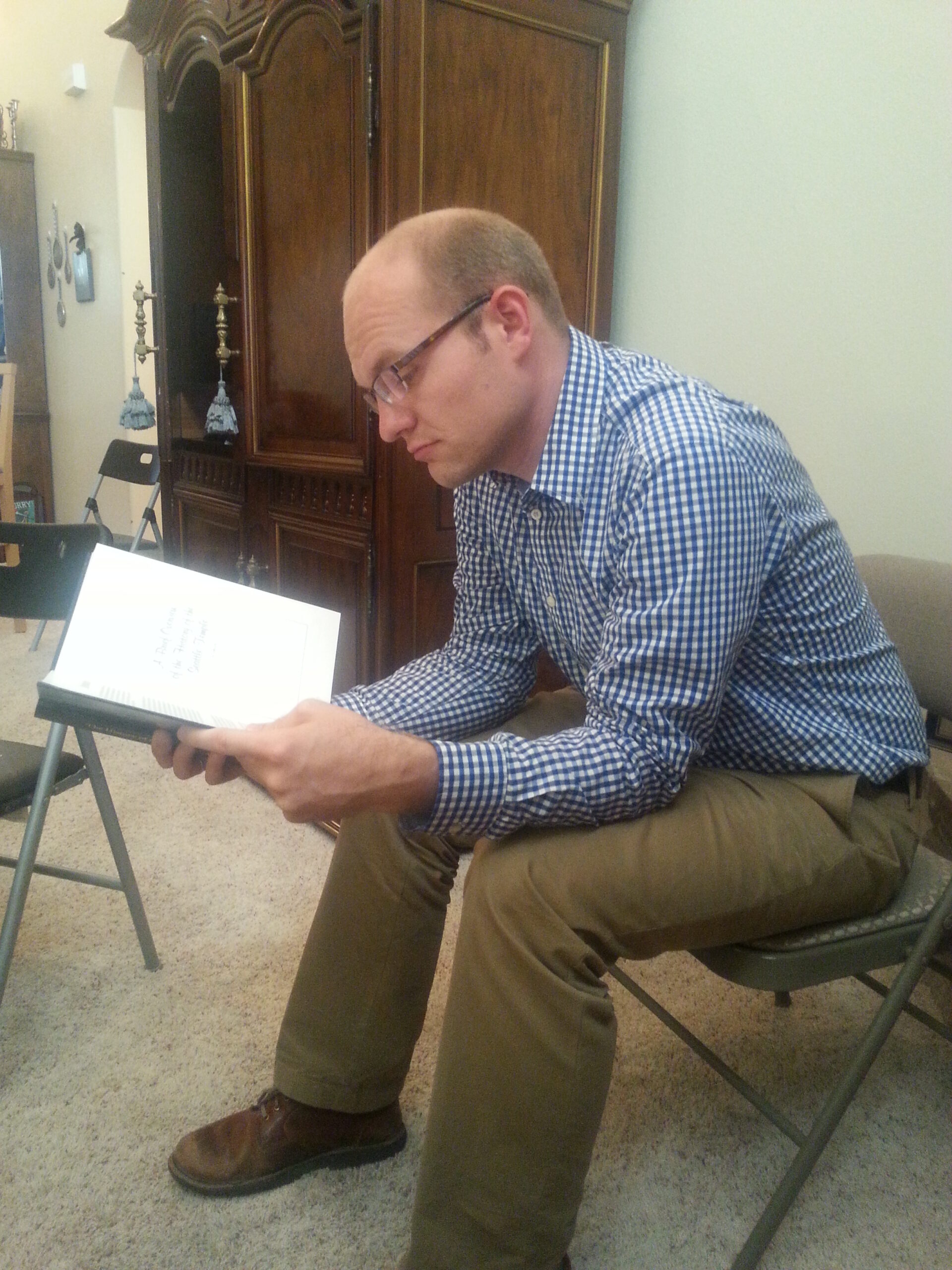
In 2015 and 2016, after 35 years of doing so, I stopped attending the LDS church every week.
I was the go-every-week type, because we were a go-every-week family growing up. Physical illness being the only justifiable exception really; yes, we went to church even on vacation.
So to stop going every week—that was something.
It had to do with many things, but the immediate causes were:
- my dad’s death in 2014
- “aging out” of the YSA wards, and finding the “family” ward uninspiring; and
- the 2015 policy to excommunicate for same-sex marriage, and prevent baptism of children of same-sex couples, unless the children renounced their parents’ relationship.
In 2019, not long after that policy was rescinded, I stopped attending at all, except on rare occasion for a family member’s mission farewell or whatever.
I grew up in the church, went to BYU, but never managed to “get” the testimony I craved since I was a teenager, and which was promised to me not once, not twice, but three times in my patriarchal blessing. I read the Book of Mormon over and over, and prayed about it, and prayed some more. I had some times of feeling nice feelings about it, of believing it was true. But nothing was enough to convince me long-term. Not in the face of the many and varied critical arguments against church teachings, which I was increasingly familiar with not from the source, but from the so-called rebuttals from apologetics organizations like FARMS, FAIR, and the Interpreter.
I had doubted since I was 15, when my Baptist friends gave me criticisms of Mormonism that I couldn’t counter. On top of that were ideas from secular sources which, while not specific to Mormonism, gave me access to an alternative, not-necessarily-supernatural worldview; for example, learning in American History class of the theory that the Salem Witch Trials were explained not by witches practicing supernatural witchcraft1As I believed; after all, I was taught that evil spirits were real. but by the population unwittingly consuming ergot fungus, and having hallucinations.
There was nothing that ever got me to feeling settled about it. In retrospect, though I could get myself to testify of its truthfulness in bursts of zeal and emotion, there was always a feeling of things being unsure. I wasn’t convinced. Yes, it seemed more likely to me that Joseph Smith was a prophet as I’d been taught, but there was enough likelihood that he wasn’t that I couldn’t really be done with it. The question was always there in the back of my mind.
Over time, more or less against my will, my critical faculties grew. Literature classes at BYU. Probability theory in grad school. A book about Communism that taught me about systems of totalitarian control. And the flip side of all those apologetic arguments.
Another book that I think contributed was Elder F. Enzio Busche’s book Yearning for the Living God.
Top 3 books, ranked by number of times I’ve read them:
- The Book of Mormon (12 times? 14 times? Something ridiculous….)
- The Hobbit (8 times?)
- Yearning for the Living God (3 times?)
The Lord of the Rings (also 3 times)
Yearning for the Living God had a very different approach to Mormonism than what I was used to. It was built more around personal “miraculous” experiences and God’s love than around church authority, the priesthood, etc.
The discussion of how the German people succumbed to Nazism was also eye-opening: how it could seem so wonderful to so many of them, and yet be so deeply wrong.
As a last digression before I get to the point: the church, in my experience, was (and perhaps still is) religiously and spiritually totalitarian. If you did it the way the church told you to, you’d give everything to it. Quite explicitly. In my view the pattern was set by how Hiram Page was dealt with early on when he claimed revelations through a seer stone, the same method of revelation that Joseph Smith used. The resolution was for Joseph Smith to receive his own revelation proclaiming Hiram’s to be satanic, and also, reportedly, to grind Hiram Page’s seer stone to powder. This respected an implied principle: that the authority of the center is supreme to the authority of the individual. That was my experience, too—even to the point that we were encouraged to deny our own direct experience. How many times was I told, as a doubter, that I actually really did “know” that it was true? And to testify that I knew, when I didn’t? At the church’s urging I rejected my own sense of the truthfulness (or lack) of the church, and for twenty years I fought against my doubts, which were real perceptions of mine that I was taught to hate.
Okay, now the point is to give a bit about where I’m at with Mormonism:
I listened recently to John Dehlin’s interview on a podcast apparently called The Cross Examiner (1 and 2). The Mormon Stories podcast back in the day was an important window for me to a wider world of Mormonism and the world at large. It was more interesting than church which was a big part of why I couldn’t look away. So it was also interesting to hear John Dehlin tell his own story after hearing him interview so many others. And a lot of it I really relate to and admire. Yet I was left this time with the conclusion that nowadays John Dehlin’s approach is not truth-oriented, but polemical. It isn’t so different from the apologists I used to read. There is often truth in it. But truth isn’t at the forefront. It’s what will rile up the base and motivate subscribers. That was my perception.
In other Mormony news, I finally got around to reading Early Mormonism and the Magic Worldview. It’s a bit of a slog but worth it, at least for me. The hypothesis that Joseph Smith drew his ideas not from a direct channel with God but from his environment is a strong one, and exploring in depth the (likely) contributions of folk magic to Mormon doctrine was fascinating. It’s led me to this dictum:
The degree to which we regard Joseph Smith as a prophet is the degree to which we are ignorant of 19th century America. And the degree to which we come to understand 19th century America is the degree to which we come to understand Joseph Smith, who was inescapably and entirely a product of his environment.
A last thought: in dealing with the truth claims of Mormonism, and also with stuff generally, I think it’s important to distinguish different senses of the word “just”. Here are three:
1. Just as in fair, good, and righteous: “Noah was a just man.”
2. Just as in something recently done: “I just wrote this sentence.”
3. Reductive just, by which a phenomenon is regarded as fully explained by another thing: “Temperature is just the average kinetic energy of subatomic particles.”
Reductive just is rampant when people argue. Sometimes it’s valid, but often it’s not. It’s frequently a means of feeling justified (is that a pun?) disregarding somebody else’s position, or their entire worldview.
“The feeling of the Holy Ghost is just elevation emotion,” for example. This is commonly stated in ex-Mormon / post-Mormon spaces.
Of course, the feeling of the “burning in the bosom” really is classic elevation emotion. But it doesn’t fully reduce to that, because elevation emotion itself isn’t just elevation emotion. Elevation emotion is elevation emotion, with all that that implies. Why is it, anyway, that we have such an emotion? Why would it have evolved? What does it even mean to have emotions in the first place? What is subjective experience? How could subjective experience have evolved? What would be the survival advantage of it? How can we say that the Holy Ghost is “just” a bunch of things that we don’t fully understand? How is it a reduction to replace one unknown with another?
It’s not that I don’t think it’s valid to say “this reduces to that.” It just doesn’t always say as much as we think it does, or get us nearly as far in explaining a thing as we might wish, even if it did make some kind of progress.
It is comforting, I suppose, to believe we have fully explained a thing. And sometimes, I suppose, we have. But not as often as we like to think.