Category: my life

  • Timpanogos

    Timpanogos

    I’m terrified of heights. For nearly all of my life this instinctive fear has kept me far, far away from yawning chasms, precipitous drops, and freaky precipices. But somehow, in recent years, I’ve found myself called by the allure of high places—their very horror makes them weirdly attractive, and they’ve become a challenge, a quest.

    That’s how I found myself yesterday morning on a narrow, washed out trail hundreds of feet above Timpanogos Basin, pinned against the crumbling rock wall and fearing for my life. Along with my friends Daniel and Becky, I was climbing Mount Timpanogos, the massive 11,572 ft. ultra-prominent peak that looms over Utah County. (I didn’t know what that meant before so I looked it up and it’s really cool. End of brag.) The sun had not yet risen; my trusty headlamp illuminated the way before me. Daniel and Becky had just crossed over a completely washed out section of trail that so completely unnerved me that I would not follow:
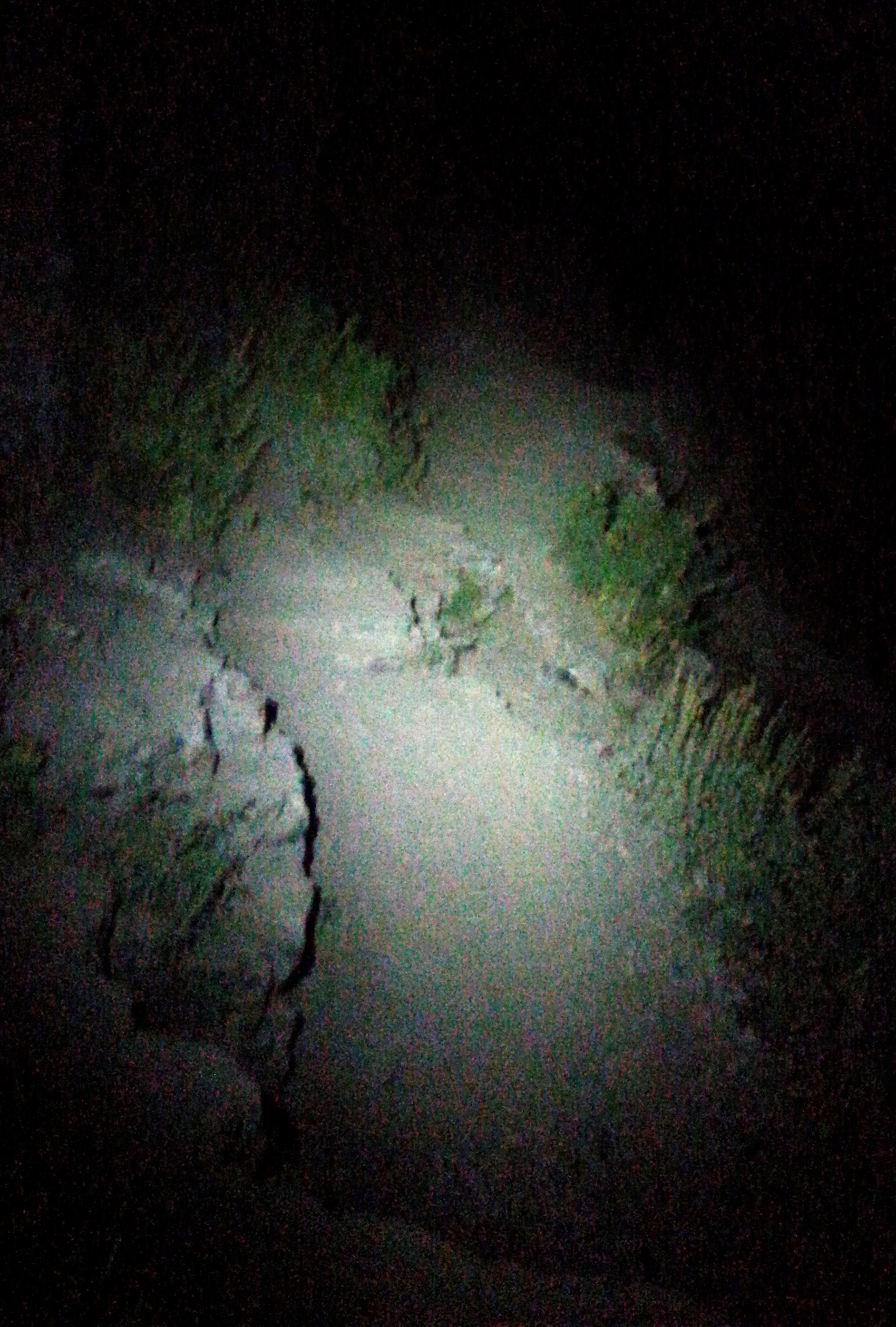
    The "trail"
    The “trail.” Somehow it wasn’t helping me feel secure in my footing.

    It didn’t matter that I had spent five hours hours climbing 3,000 feet of elevation gain over six miles. It didn’t matter that I wouldn’t get the magnificent sunrise view from the summit, or even the saddle. I was terrified, and I was turning back. In the Inside Out-style emotional headquarters within me, this guy was calling the shots:

    Fear
    Just doing his one job: keeping me alive!

    And so I turned back. I’ve done this many times. After my self-preservation instinct screams at me for long enough that my life is at risk, it becomes impossible to ignore. So I turn around. I leave the situation that so terrifies me.

    It is the lot of the perpetually anxious to be overwhelmed by things that have little or no impact on other people. It’s our lot to turn around when the danger signals are too intense, but when nobody else is turning around. And it’s our lot to feel cowardly for doing so, to wonder if we’ve done the right thing.

    But I believe it is the right thing. Because the agony of ignoring the self-preservation instinct is real. And because turning around and giving up are not the same thing.

    I retreated down the trail a ways while Daniel and Becky pressed on without me. I felt beaten, but relieved. I took pictures. I watched a mouse scurry about looking for fallen bits of trail mix. I sat by myself in the dark and watched the stars. I felt the wind and enjoyed the night solitude.

    It was peaceful. I felt serene. But somewhere within me a voice began calling. I realized I wanted to try again.

    So I returned to the washed out section of trail. I took it at my own pace, in my own way, for my own reasons. And I crossed it, no problem.

    I continued up the path a ways, but soon found myself confronted by yet another disintegrating trail segment that I could not stomach. So again I stopped. Again I turned around.

    I went down to the basin. I watched the dawn first simmer on the horizon and then roll over the valley:
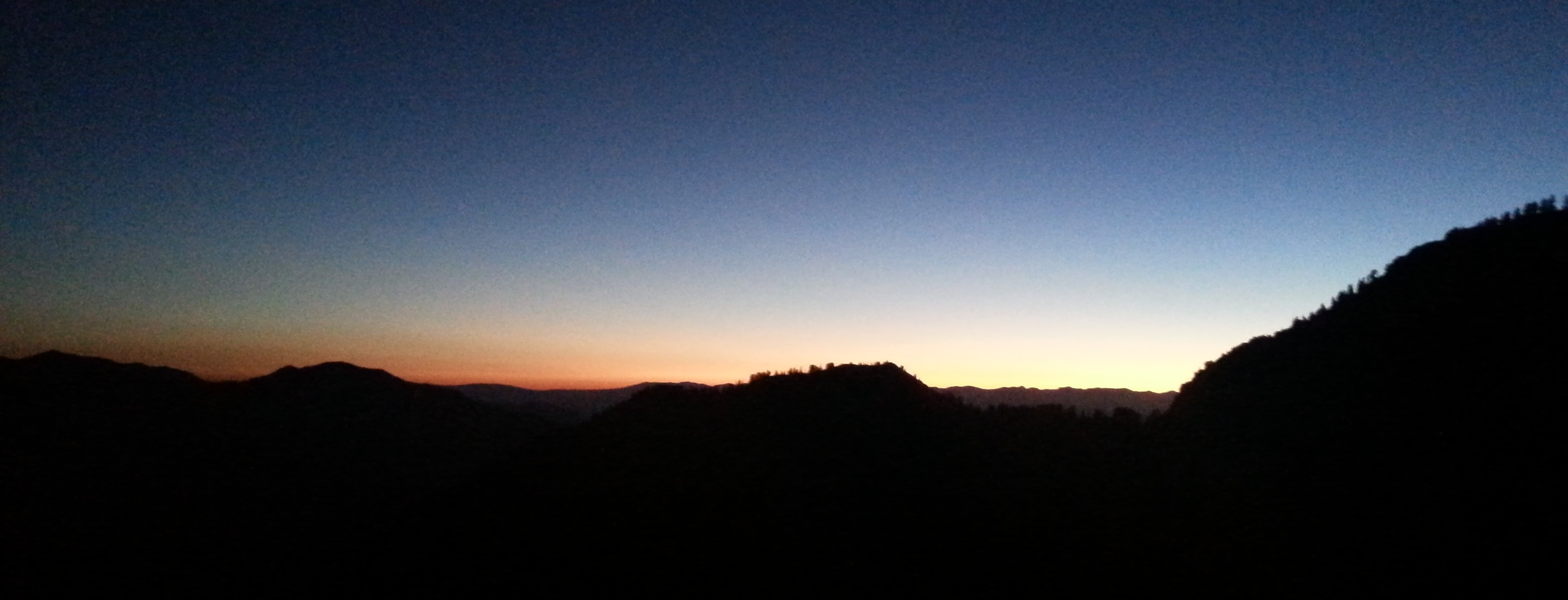
    Dawn

    I explored. I saw what seemed to be moose, but which turned out to be a hunter’s horses. I talked with him about mountain goats and the whereabouts of Emerald Lake. I watched a noisy squirrel drop pine cones from from the tree tops down to the ground. I saw this:

    Timpanogos Basin

    It was marvelous.

    But in full light of day a voice seemed once again to be calling to me. I had to try again.

    Back up the trail I went, back up toward the saddle. In the darkness my fears had filled the information vacuum, making everything seem more dangerous than in reality. But in light of day, my fears had less power over me. I could see that the slope beside me wasn’t completely shear, but often was somewhat gradual. With this encouraging observation I was able to advance up the trail much farther than previously. But again, at some point I encountered the limit of my appetite for risk, and I turned around.

    I’ll say it once more: turning around and giving up are not the same thing. Sometimes we need to retreat and regroup. I turned around because my anxiety level was intolerable, and I would not have been a safe, surefooted hiker. But I returned again and again because the challenge remained, and it beckoned to me. I’m proud of that fact.
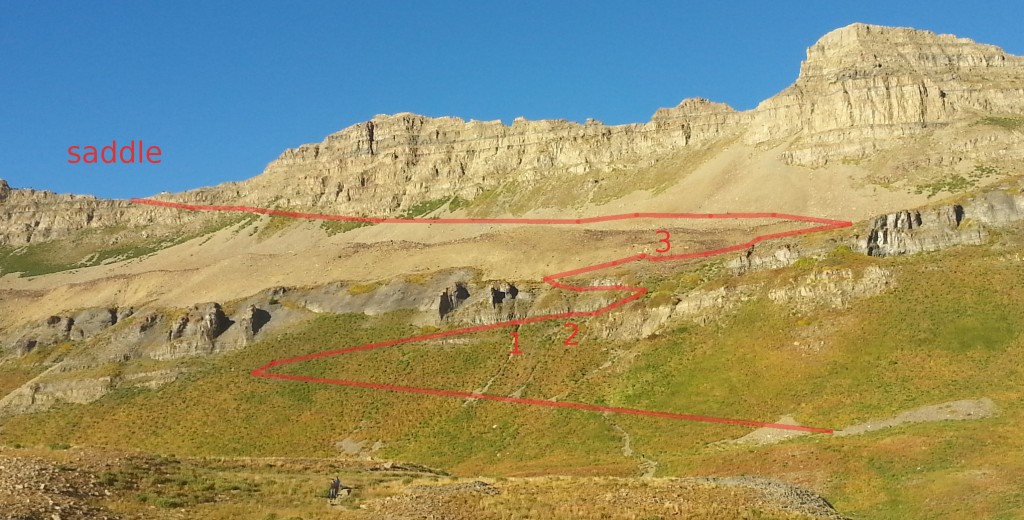
    Ascent to saddle
    My progress can be seen here. The red indicates my best estimate of the trail route as it climbs up to the ridge. The numbers 1, 2, and 3 indicate my three turnaround points.

    Each time I returned I made it farther than before. I didn’t reach the summit, but I achieved what for me were great things. I believe that the following helped me:

    1. Familiarity. Some things are frightening largely because they’re unfamiliar. It’s easy to overestimate the risks of things unknown. The first time I faced the washed out section I couldn’t pass it, but the second time I did so easily.
    2. Going at my own pace. Knowing that nobody was waiting on me to make that daring leap ratcheted down my anxiety level.
    3. Knowing more. When the sun came out, true information about the lay of the land replaced fearful speculations about what might lie in the dark.

    Though I’ve previously blamed my childhood anxiety on my family environment, further reflection leads me to believe that mostly I’m just an anxious person, and that there’s nothing wrong with that. Anxiety is natural—everybody has it, and it helps to protect us against dangers. People’s sensitivities to anxiety vary widely, from the stupidly reckless who really have no fear, to the anxious overwhelmed whose lives are dominated by it. We’re all on the same spectrum, and one person’s shameful cowardice is another’s prudent caution. I’m not sure how much we can change our temperament, but I believe we can learn to work better with how we’re built, whether by reining in our dangerous risk-taking or by finding ways to dare things we never believed we could.

    Hiking Timpanogos was incredible. For me it was a truly intense experience. Magnificent. Terrifying. Beautiful. I’m so glad I made the attempt. I’m grateful for the patience of my friends, who helped me to achieve far more than I would have on my own. Which leads me to:

    1. People. You don’t have to face your fears alone. And that makes all the difference.
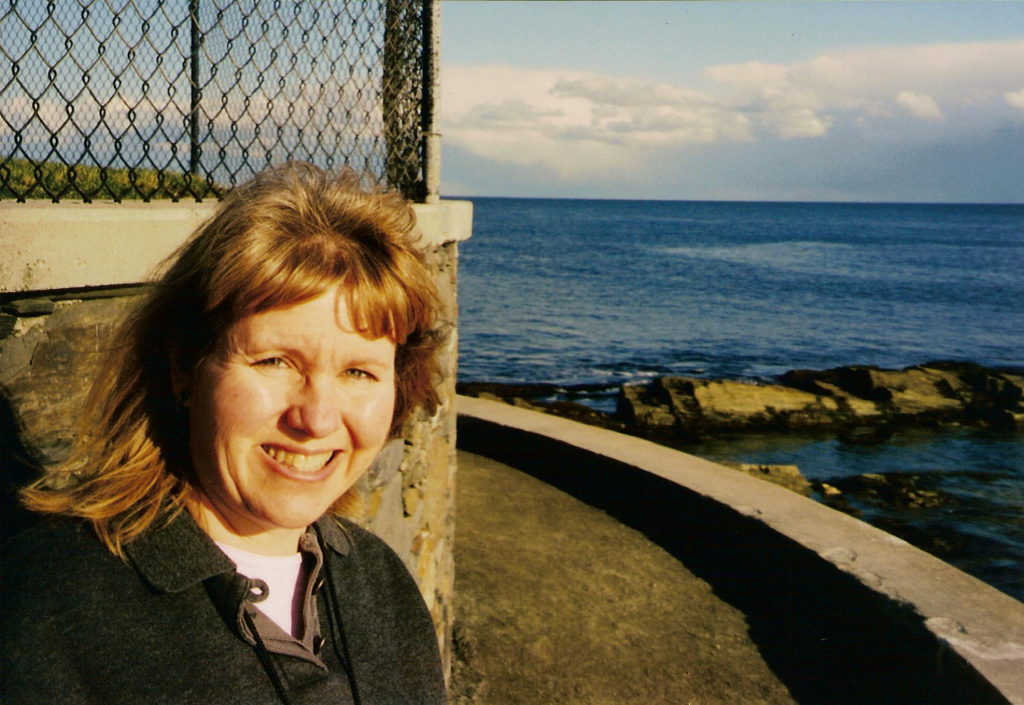
  • My Beautiful Mother

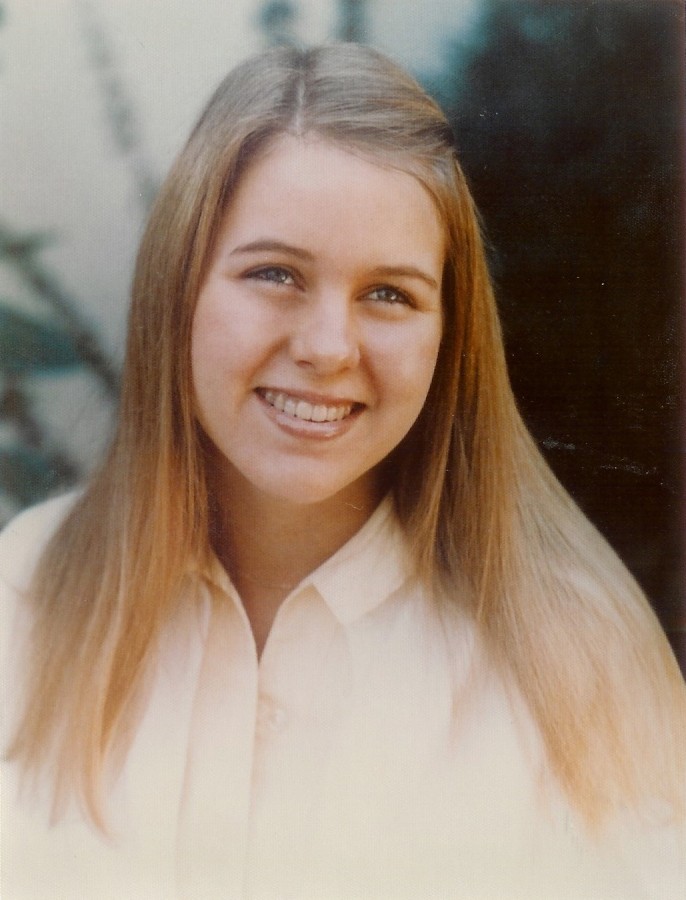
    Not long before she died, Mom took a trip to California. While there, she had this picture taken. It's one of my favorites.
    One of my favorite photos of Mom, taken during her trip to California not long before she died.

    Just after Mom died, her friend, Diann Macbeth, wrote a remembrance of her based on decades of church service together, which my family has treasured ever since. I now share it in full:

    Janet, My Friend

    Occasionally someone enters our life so softly and gently that at first we scarcely notice they are there. Like a soft breeze on a hot summer day that cools and refreshes, they become balm for our frenzied lives, asking little but giving much. Janet was such a person. Our lives have crossed and crisscrossed for nearly 20 years. I was privileged to watch her work in the various church organizations to which she was called. She quietly did all that she was asked and a little bit more. Always desirous to learn from others she had no idea that she was also a great teacher of humility, love, and compassion. As she was never aggressive and was always content to stay in the background I could easily have missed her sweet and loving spirit, except one day I witnessed one of her truly beautiful smiles. It lit up her eyes and seemed to envelope me in such heartfelt warmth. I determined that I was foolish for having missed knowing her better and set about to rectify that. The Lord granted me my wish and we were called to work in the Young Womens together. I was in awe of the sensitivity and love she had towards the girls. She approached every lesson and assignment with 110 percent preparation and we were rewarded with not only that work, but also the inspiration from the Lord as He guided her in her desire to serve. She was one of my most cherished visiting teachers, and I delighted in the insights she gave to the monthly messages. Our children also extended our love towards each other as they interacted together. As a friend she was a real treasure—never judgmental or too busy for a word of praise or encouragement. My heart and soul will surely miss her presence as will so many others, but I know as sure as I breathe that someday we will get to exchange a loving embrace and be together again.

    Dianne Macbeth
    March 3, 2003

    My mother, Janet Patricia Watson Hansen, was a beautiful person. She struggled in life—oh, how she struggled! At times, each day was a challenge, and she couldn’t even get out of bed. But she was a good person. She was kind. She habitually sacrificed her own welfare for the benefit of others. She was non-judgmental almost to a fault, going far out of her way to try to imagine how another’s seemingly ridiculous or outrageous behavior might actually make sense from their point of view.

    Mom experienced life with an inward intensity that one would not suspect from her meek outward demeanor. She was highly sensitive and exposure to sights, smells, sounds, crowds, and other stimuli often overwhelmed her. The smallest slight could put her in tears. And yet the same sensitivity that made each day a struggle was also the source of her tenderness and kindness, her thoughtfulness, her love of animals, and so many of the sweet and wonderful things about her.

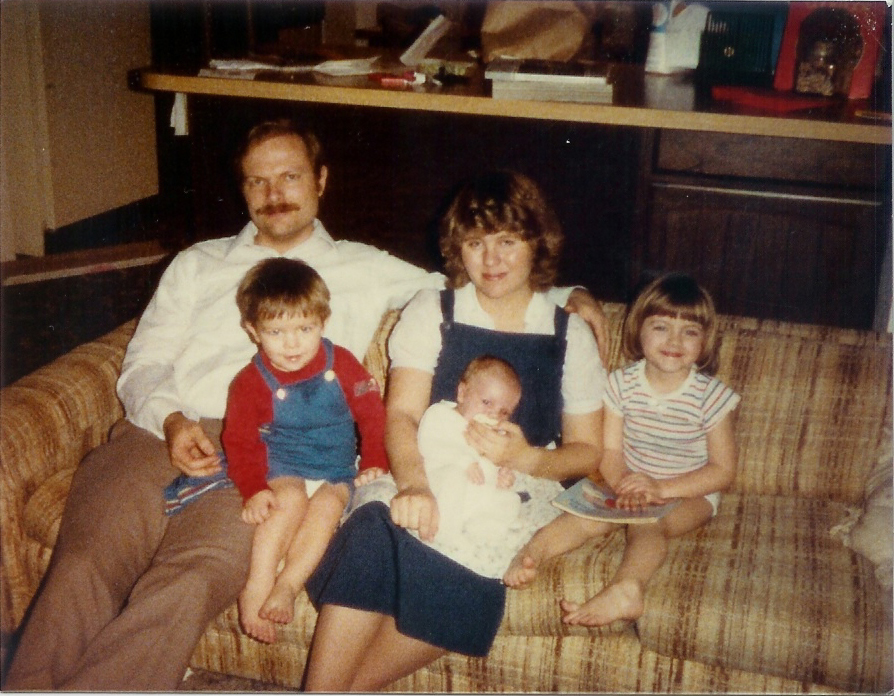
    In some of the old family photos and videos, you can catch Mom with a sort of pained and haunted look in her eyes, as here:

    Family Picture at Zinser HouseThose were the times when her demons tormented her, when the upsets of the world around her were too much for her sensitive soul and she drew inward in self defense.

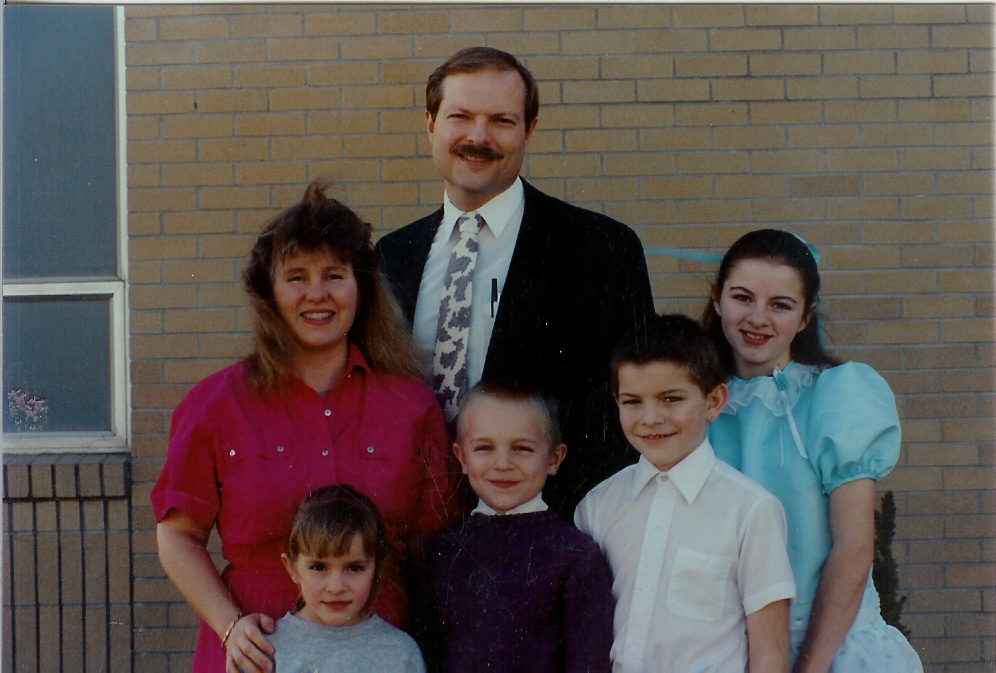
    In other photos, you can see that she’s happy. Demons at bay, she felt safe and free to love and to take joy in life, as here:

    Impromptu familiy photo on a windy day at church.

    Mom suffered much, but she loved much. She needed much, but she gave much. She was, in her heart, just a sweet and peaceful girl from southern California who did the best she knew how to make the world a better place in spite of abuses suffered and a life that overwhelmed her. I wish things had been different. I wish she had found a better way past what haunted her. But she is gone, and this world that didn’t deserve her has been deprived of her gentle beauty these twelve years. I mourn her still.

    Mom's senior class picture for Marlborough High School in Los Angeles.
    Mom’s senior class picture for Marlborough High School in Los Angeles.
  • Mom’s Suicide

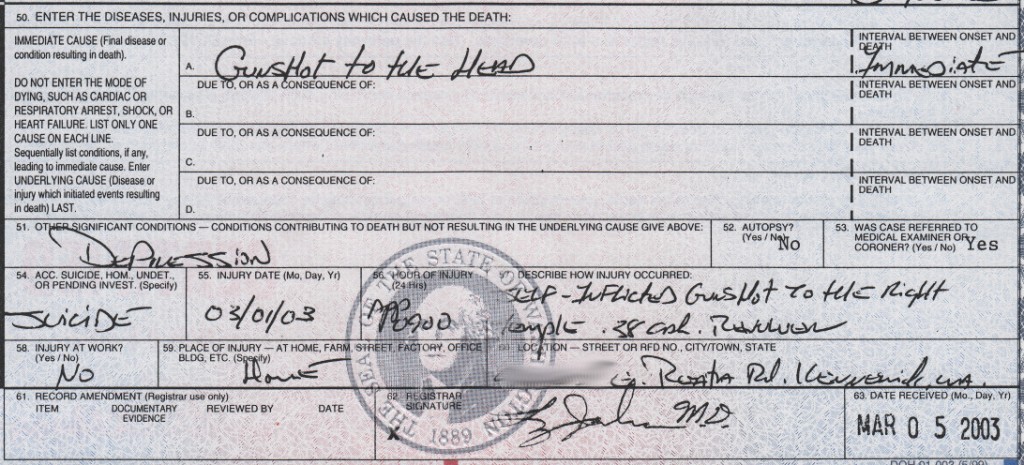
    The cause of death section from my mom’s death certificate.

    On March 1st, 2003 my mother shot herself in the head, ending her life at the age of 46.

    Today marks twelve years since that day. For much of that time I rarely ever spoke of my mother’s suicide. One small indication of this: the first posts on this blog were less than a year after her death but say nothing of it. In fact, I don’t think I ever mentioned Mom’s death on my blog save once very briefly in 2009, only to make a point about how infrequently I ever talked about it. (My sister also mentioned it in a comment.) I would often avoid mentioning it even in situations where it made perfect sense to share that part of my life with people. It just seemed too horrible. It was a symbol of the brokenness that was my life, and I preferred to bury it deep.

    I’ve recently had a few unexpected conversations with a some dear old friends, which has put me in mind of the past. Somehow that led me to the realization that I’d never written a single poem about my mom’s suicide. Being the sort of person who uses poetry and other sorts of writing as a way of dealing with the tough stuff in life, it was an astounding realization. I knew I had to make this right, and figured it would be good for me to share it on my blog. And so I’ve written a poem about that horrible day when my mom killed herself.

    This isn’t a happy poem. I’m not at the point yet where I can look back on this event without pain. There are still many loose ends inside of me, things I haven’t resolved, things I’ve never even expressed. But that’s exactly why I’m sharing this.

    Not only is this poem not a happy one, but it’s also pretty negative toward my mom. My mother was a wonderful person, but she was emotionally very unstable and this was a source of pain for the whole family. Some of the specifics of this come out in the poem. But be sure to read the commentary following the poem to get some perspective.

    I now present to you this long-overdue bitter retrospective poem concerning one of the most painful experiences of my life.

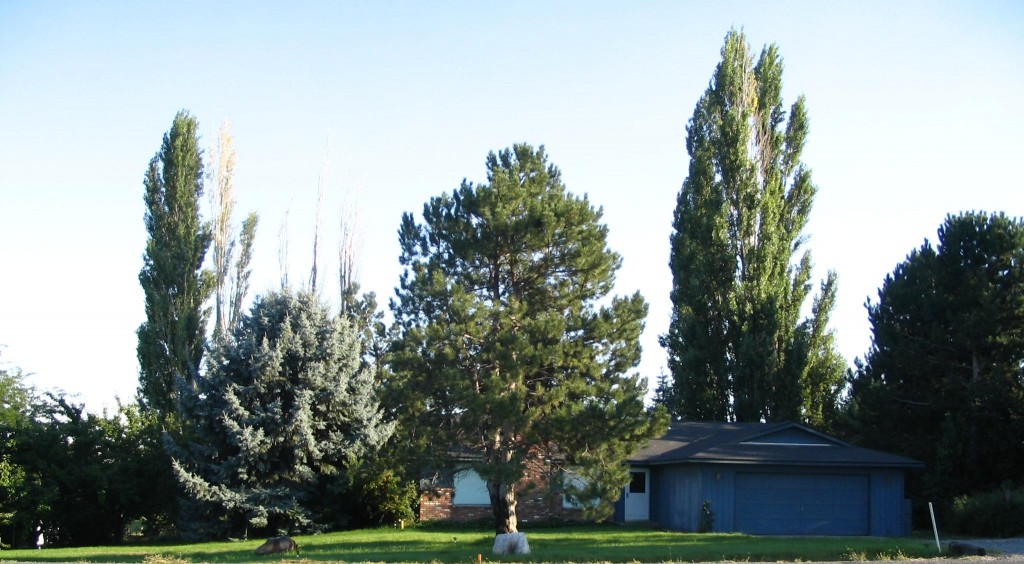
    The house I grew up in. There might have been a few trees! This is even after we removed about half of the poplar trees.
    The house we lived in. This is the scene of almost all of my childhood memories, good and bad. This is the place where I fell in love with the sound of the wind in the poplar trees. And this is the place where my mother killed herself one fateful March day.

    A Shot Rang Out

    A shot rang out in Kennewick
    Beneath the swaying poplar trees.
    A shot rang out, and there were screams
    The day my mother died.

    My mom—how can I sum her up?
    I can’t. She was just
    My mom—kind, gentle,
    Needy, vindictive.
    My mom—asleep all day in bed.
    We learned early to fend for ourselves.

    But that shot rang out in Kennewick
    And now my mom was dead.
    “Gunshot to the head.”

    My mom—who’d come crying into my bedroom.
    My mom—saying, “Fix me, child, I’m broken.”
    My mom brought out the fake
    And the hypocrite in me.

    Like an earthquake
    I felt my world tremble
    When I heard.
    I couldn’t breathe
    And I breathed too much
    At the same time.
    In. Out. I’m crying. I’m okay.
    In. Out. I’m different now.
    Somehow everything has changed.

    I didn’t see her lying there
    So still upon her bed.
    I didn’t see her bleeding
    Still warm but surely dead.
    I didn’t hear them speak of her,
    Excusing what she did.
    I didn’t see them bury her—
    I was there for none of it.

    In. Out. Out. In.
    Things never were the same
    No matter how I tried
    The day that shot rang out in Kennewick.
    It was the day that my heart died.

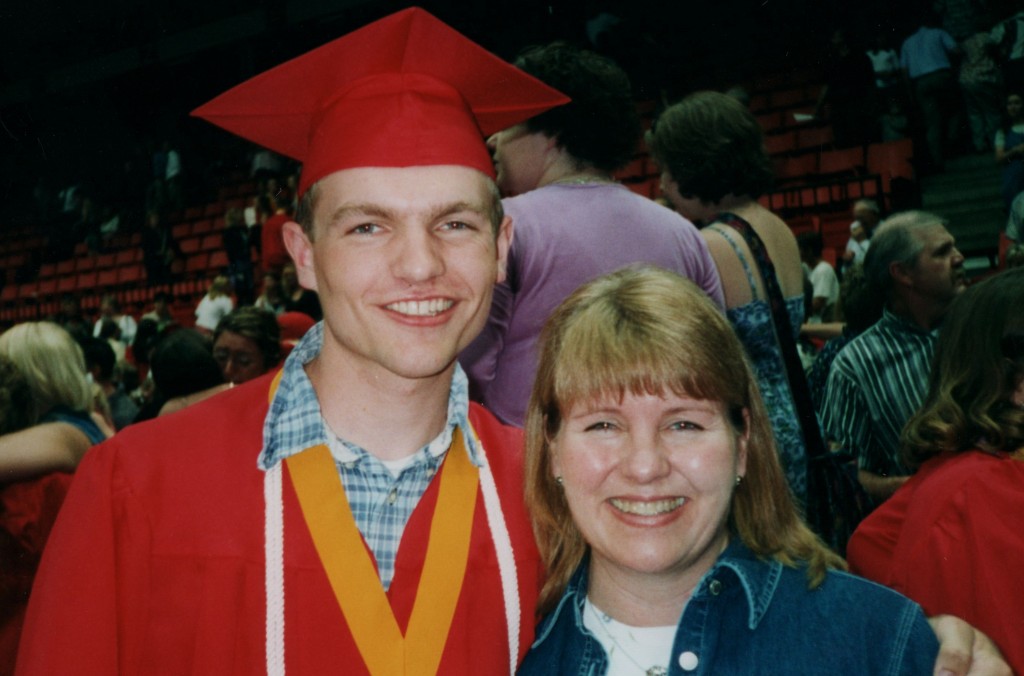
    Me and Mom at my high school graduation
    Me and Mom at my high school graduation.

    Commentary

    And now a few comments about the poem.

    “My mom—asleep all day in bed. / We learned early to fend for ourselves.” This poem takes a fairly cold tone towards my mom. I just don’t have the sort of rosy happy feelings about my mom that I think many people have towards their mothers. As kids many of the household responsibilities fell to us as Mom was “sick” in bed. She would lie there all day, the pretext being headaches, or chronic fatigue, or whatever. Maybe she was legitimately sick, maybe she was just escaping from emotional stresses she didn’t know how to manage, but either way, it really sucked for us. Sort of made it feel like she didn’t really care about us because she was just in her room all day in the dark and we had to take care of her rather than her taking care of us. But that’s just part of the reality of who she was. I think it was how she dealt with all the crap from her childhood. It was bad for everybody, but that was how it was.

    “Needy, vindictive.” “‘Fix me, child, I’m broken.’ / My mom brought out the fake / And the hypocrite in me.” When I was a teenager my mom used me as a therapist. She would come into my bedroom when she was upset, cry, and then wait for me to say things that would make her feel better. Maybe that doesn’t sound so bad, but it was a powerful symbol of a totally backwards relationship. It made me feel deeply insecure to think that my mom was so unstable that she had to turn to me—her teenage son—for help. Who was I supposed to turn to when I ran into trouble? It got me into the habit of submerging my own needs since there just wasn’t room for them. It also made me into something of a fake because I would just tell her what I thought she wanted to hear so that she would feel better and leave me alone. It was awful. When I was a little bit older and told her I wouldn’t do that anymore, she acted as if I had betrayed her and, in truth, our relationship was never the same.

    “Excusing what she did.” After Mom died, people would say how they felt she hadn’t really been in control of her actions. And, in fact, I actually feel like that is essentially true. Mom was horribly depressed. I don’t think she meant to hurt people, only to end her own misery, and I don’t believe she will be condemned by God on account of having taken her own life. However, from the perspective of a child, having your mom kill herself is unquestionably worse than if she had dropped you off at an orphanage. It’s total abandonment, completely final. Hearing people explain away Mom’s actions as not really being her fault was difficult to reconcile with the intense anger and pain I felt at being essentially abandoned by her.

    “I was there for none of it.” I wasn’t present for the funeral or any of the usual mourning rituals as I was in Pennsylvania as a missionary. For me, this was clearly detrimental. It left me to deal with my grief largely on my own or with strangers, or at least people I hardly knew. It would have been better for me to have mourned in the presence of my family and the wider community at home. That said, I should mention here the many people who reached out to me through letters at that time. They were a source of great comfort, and I haven’t forgotten your kindness.

    “It was the day that my heart died.” Mom’s suicide was probably the most impactful single event in my life and the lives of my family members. There were the years before, and the years after. It shattered my remaining illusions about the dysfunction in my family back then. Maybe, just maybe, I could have pretended before her death that things were in some ways normal, in some ways just fine. But once Mom killed herself, that possibility vanished completely. I had to admit to myself that, from the perspective of a mother’s responsibilities toward her children, our mother had largely failed us. I don’t think that was all her fault. She started out with some serious deficits herself. And yet it was true, and that hurt.

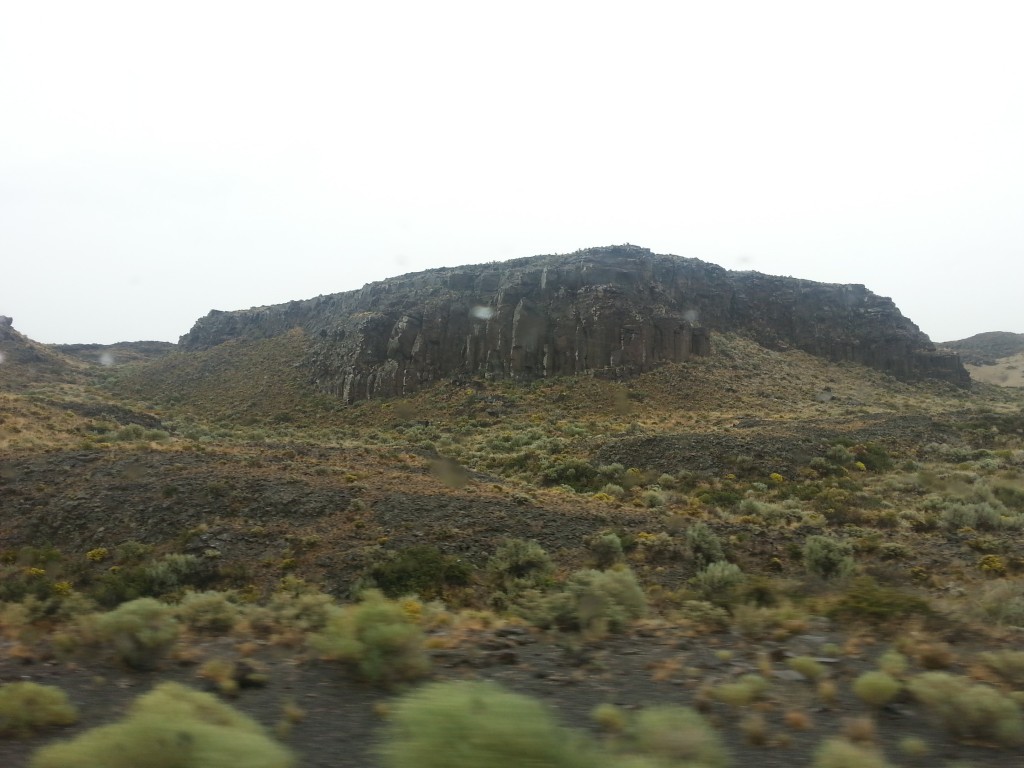
    Saddle Mountains by the roadside
    Part of the Saddle Mountains by the roadside on a rainy day, photographed during a scenic drive from the Tri-Cities to Seattle in 2013. So sad with the rain, and yet so beautiful.

    Conclusion

    I think one reason it took me so long to open up to people about Mom’s suicide is because I felt deeply ashamed of it. Kids (and maybe people generally) have a tendency to blame themselves for their unjust circumstances, e.g. “If Daddy beats me it must be because I’m bad.” You could call it the shame of tragedy. I think I felt like if I didn’t have a mother who was happy and safe and stable, then it must have been because I didn’t deserve one. Other kids were better somehow, so they got the moms who were happy enough and who would live past their forties. It’s totally irrational kid logic, but growing up like I did, that sort of flawed reasoning—and the deep-seated sense of inferiority, injustice, and anger that accompanied it—became a fundamental part of my worldview. I believe I still carry around some of that sense of shame about the things I’ve experienced.

    I hope nobody feels I’m trying to tear down my mom’s memory here, nor am I trying to blame all my problems on my mom. I still really believe Mom was a good person basically doing the best she could. It’s just also true that she was a really hard sort of person to have as a mother. Reconciling those two realities about her is the essential conflict and paradox of my mother.

    This post has been at least partly about shining more light on one of the darkest periods of my life. Let it also be about remembering Mom. Her life was a painful struggle and in the end her challenges were too much for her. She fought the darkness all her life, and finally she could fight it no more. But she did fight it for many years.

    I believe she did the best she could, and I honor her for her struggle.