
Blog

  • Too Whatever

    A beautiful bit of Swedish countryside (Stora Sjöfallet Park). Photo by Nattfodd. CC-BY-SA 3.0.
    A beautiful bit of Swedish countryside (Stora Sjöfallet Park). Photo by Nattfodd. CC-BY-SA 3.0.

    A few weeks ago with some friends I watched a Finnish movie called “Äideistä parhain” (Mother of Mine). It tells the story of a young Finnish boy named Eero. Eero has a bit of a rough time through the course of the film. His father is killed in an air raid during fighting between the Soviet Union and Finland during World War II. Eero’s mother sends him away to live with a Swedish family in order to escape the dangers of the war, the mother in his adoptive family—Signe—is prickly and mean, and his own mother runs off with a German man and tells the Swedish family they can keep Eero forever.

    Talk about abandonment trauma!

    Eventually, Signe sees Eero’s need in his state of extreme vulnerability, sets aside her own pain, and embraces the boy as a member of her family. From the moment she first shows him tenderness and gives him a hug, I started crying and hardly stopped for the rest of the movie. But good crying!

    Other tragedies befall the young lad and I won’t spoil how the film resolves things, but I want to say that I loved this movie. And I think there’s a very specific reason why.

    Growing up there were many happy times when we were younger, but at some point things began to change. Apparently my mom began to remember abuse she suffered when she was a child, and the knowledge seemed to burden her. Sometimes she seemed to revert partly back to childhood, her ability to play her role as one of the adults in the family becoming seriously impaired. I don’t think she ever really figured out how to heal. And all this trouble arrived in my parents’ already struggling marriage and only complicated things. Mom didn’t trust Dad. Dad didn’t know how to help Mom and would burst out in anger over her incapacity. It was a mess.

    Which left me and my siblings in many ways to raise ourselves. Mom and Dad were too distracted with their own problems. They probably figured that we were good kids and would do just fine. They did their best. But in so many ways they simply weren’t there for us. Mom was sick and Dad was angry, and there wasn’t a lot of room for us kids to be kids—dependent, in need of guidance and help, making mistakes, all those things.

    That’s why the story of Eero touched me so deeply. It’s about a kid whose parents haven’t been there for him. His father was killed, then his mother sent him a way and ran off with another man, only taking her son back when her lover left her. But when mean and nasty Signe came to love Eero as her own, it seemed to make everything better. For me it was a powerful symbol of the wrong of abandonment being made right by love. How could I not weep?

    Having parents who are too busy, too hurt, too distracted, too dysfunctional, too whatever to be there for you, to simply be parents to you, can leave awfully deep wounds. There’s a void within your heart that feels it will never be filled. It’s a terrible thing.

    There’s still a part of me that yearns for someone to reach out to me in love to make it right. Like Signe did for Eero. Maybe someday that hole in my heart will be filled, but for now I carry the wounds with me.

  • Phil’s Lesson

    A groundhog doing its thing. Photo by Eiffelle. CC-BY-SA 2.5.
    A groundhog doing its thing. Photo by Eiffelle. CC-BY-SA 2.5.

    In Groundhog Day, Phil Connors (Bill Murray’s character) lives February 2nd over and over and over again.

    Such an experience would be maddening—no relationship you built would persist, no accomplishment would be lasting. Yet it would also be liberating—a chance to live life without permanent consequences aside from the learning you take with you. You could try things you’ve never tried, spend time on things you normally don’t have time for, work at being the kind of person you really want to be.

    It’s fun to fantasize a bit about what you would do. If, when I woke up in the morning, it was February 2nd again, what would I do? How would I live that day, over and over? There would be no progress other than the improvement of myself, so how would I improve?

    Play the piano like Phil Connors does. That’s the first thing that comes to mind. Finish writing that stinking novel I’ve been working on since November? Nope, because my writing would reset each morning and I couldn’t keep it all in my head. (Or could I?) Become a better cook? Definitely. Overcome my fear of heights through repeated risk-free exposure? Yes, of course.

    I’d give up my social inhibitions. I’d one by one spend the day with each of the people in my life that I could, getting to know them, learning from them. I’d have those scary conversations I tend to avoid, knowing if I screw it up I can try it again the next time.

    There would be so many other things to do. As much as it would be a curse, being stuck living the same day repeatedly would also be a mighty gift.

    It all sounds so different from “real life”. But is it?

    Every morning I wake up in the same bed, at the same time, to the same alarm sounds with basically the same amount of light streaming in through the windows. I have essentially the same opportunities as the previous day. I see roughly the same people doing roughly the same things. Most of the risks I take have short-term consequences and don’t cause the world to end. Though much in life is transient, what I learn and become continues with me from day to day.

    Really, when you think about it, our lives are much more like Groundhog Day than not. Most things stay the same most of the time. The most important thing that can change in our own lives is usually ourselves.

    Remember all those things you’d do differently if you were caught in a Phil Connors-style time loop? Don’t most of them apply to regular, linear life, too?

    I’d say they do. I’d say that’s Phil’s lesson.

  • The Klonopin Kid

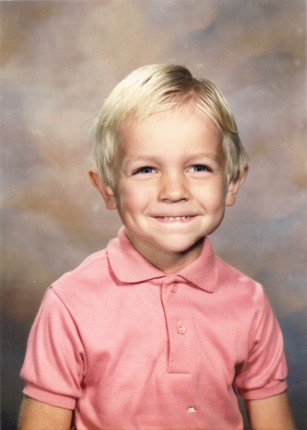
    A Young Josh Hansen

    I was eight years old. It was a day that most kids would receive as joyously as a mountain of Christmas presents: the last day of school. Yet there I was, past my bedtime, curled up on the floor outside my parents’ bedroom door, sobbing, sobbing.

    I was crying because second grade was over, and so was my access to my second grade teacher—the most stable, warm, and motherly person in my life.

    I was crying because I felt so loved by my teacher, and because I knew in my heart that, though she surely strove her best, my own mother didn’t have the mental and emotional resources to make me feel so safe and loved.

    Enter Klonopin

    Fast forward to third grade. Another scene at home: this time, I’m sitting in the living room talking to Dad.

    “How many times does your heart beat in a minute?” he asked me. We probably stopped and counted my pulse for a minute to find out. Maybe it was something like 58 beats per minute. “And how many minutes have you been alive? 60 minutes times 24 hours times 365 days times 8 years….” He did the math, maybe on paper, maybe on a calculator. “Your heart has beat 243,878,400 times in your lifetime already. What makes you think it’s going to stop now?”

    I had been having trouble sleeping on account of anxiety. I would lie in bed at night fearful that my heart was going to suddenly stop. Dad was trying to talk me through it rationally. And somehow I found the calm reasoning and the authority of math comforting.

    It was enough for that night. But as convincing as the probabilistic argument was, my anxiety remained.

    Soon Mom took me to see a pediatrician (Doctor Zirkle) about it. At the doctor’s office, I sat on the edge of the exam bed, white paper crinkling beneath me, and answered questions about my fears. We left with a prescription for Klonopin, a benzodiazepine tranquilizer.

    The time soon came for my first dose. One night I went to the kitchen with Dad. It was dark, lit only indirectly by the hallway light. From the medicine cabinet above the dish washer Dad brought down the bottle of Klonopin pills. He gave me a glass of water and a tablet, and told me to swallow the tablet whole.

    Until that time my experience with taking medicine was essentially cough syrup and other liquids. I had never swallowed a pill whole before and felt like I’d choke on it if I tried. I was an anxious kid! I couldn’t do it. In my fear I dropped the pill, and Dad swore and left me to overcome my fear alone.

    I picked the Klonopin tablet up from where it fell and there in the dark of the kitchen at the age of eight, I taught myself to swallow tranquilizer pills.

    A tree’s extensive roots, absorbing whatever comes their way. Only metaphorically relevant to this post. Photo by Wing-Chi Poon. CC-BY-SA 2.5.

    First Do No Harm

    I kept taking Klonopin through third grade. Eventually I seemed to grow out of the need, and by fourth grade I don’t think I was taking the drug at all.

    Why was I such an anxious kid? I think I was just sensitive to the instability around me. By fifth grade I was conscious of feeling that my parents and my family were “different”, that there was something wrong with what I experienced at home. If that’s when I became aware of it, then when did the dysfunction really start? Surely it must have been substantially earlier.

    Significant anxiety returned to my life in ninth grade, and with it came Klonopin as well, first as illicit doses given to me by my mom, then as a prescription of my own. My anxiety at the time was overwhelming and it was reassuring to take a drug I knew was supposed to calm me down. But it seemed to make things worse in the long run—I continued to have debilitating panic attacks, which didn’t actually go away until getting off of the medication.

    If I had a child in third grade experiencing anxiety today, I would absolutely not put them on medication—how could the long-term effects of psychoactive drugs on still-forming brains and personalities be anything but harmful? I would consider seriously whether there was anything in the home environment I provided them that might be cause for anxiety.

    Kids are like plants and will grow or thrive in relation to the environment they are planted in. If that environment contains submerged conflict between adults, age-inappropriate roles for children, or anything else amiss, it will subtly warp the child’s development over time. I think that explains my childhood anxiety completely. I was simply internalizing the dysfunction I lived in.

    It’s been a decade since I took my last tranquilizer pill. I’ve been vastly less anxious since quitting them. Those things were an albatross around my neck and I’m glad to be rid of them.