Category: mormonism

Mormonism, broadly defined, including the LDS church, cultural Mormonism, post- or ex-Mormonism, and unorthodox Mormonism.

  • Chudders the Great

    Chudders the Great

    According to page 354 of the first volume of my transcribed journals, I met Chris “Chud” Lundgreen on Wednesday, August 27, 1997, in the men’s locker room ahead of Mrs. Swenson’s cross-training class, on the first day of freshman year at Kamiakin High School.

    At the time he was just “Chris”, from Colorado—as far as my journal tells and as far as I remember, he hadn’t yet announced his full adoption of the nickname Chud.

    Chud Lundgreen has been diagnosed with fatal brain cancer, and is quickly succumbing to the effects. It has been devastating to face the loss of our wonderful friend.

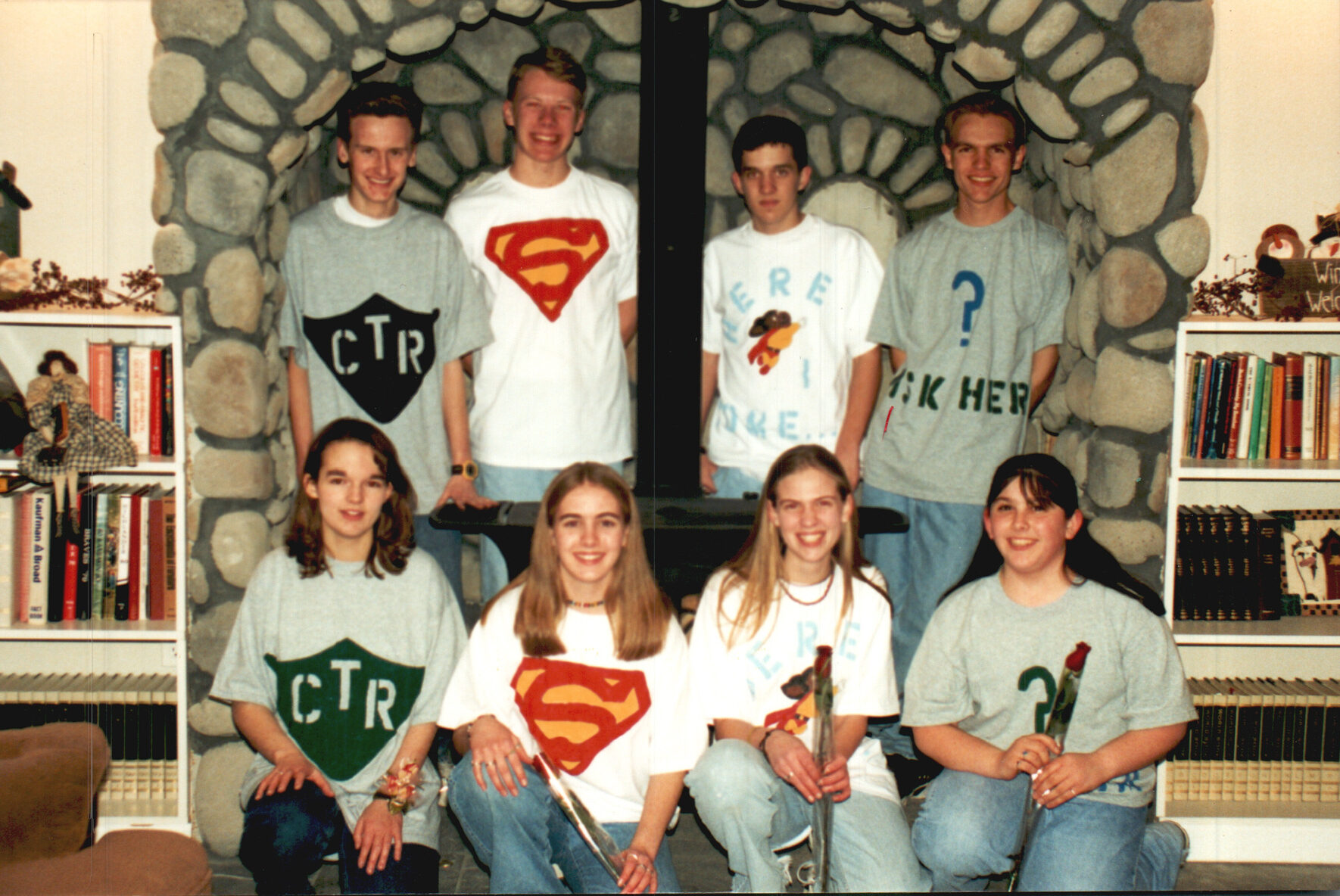
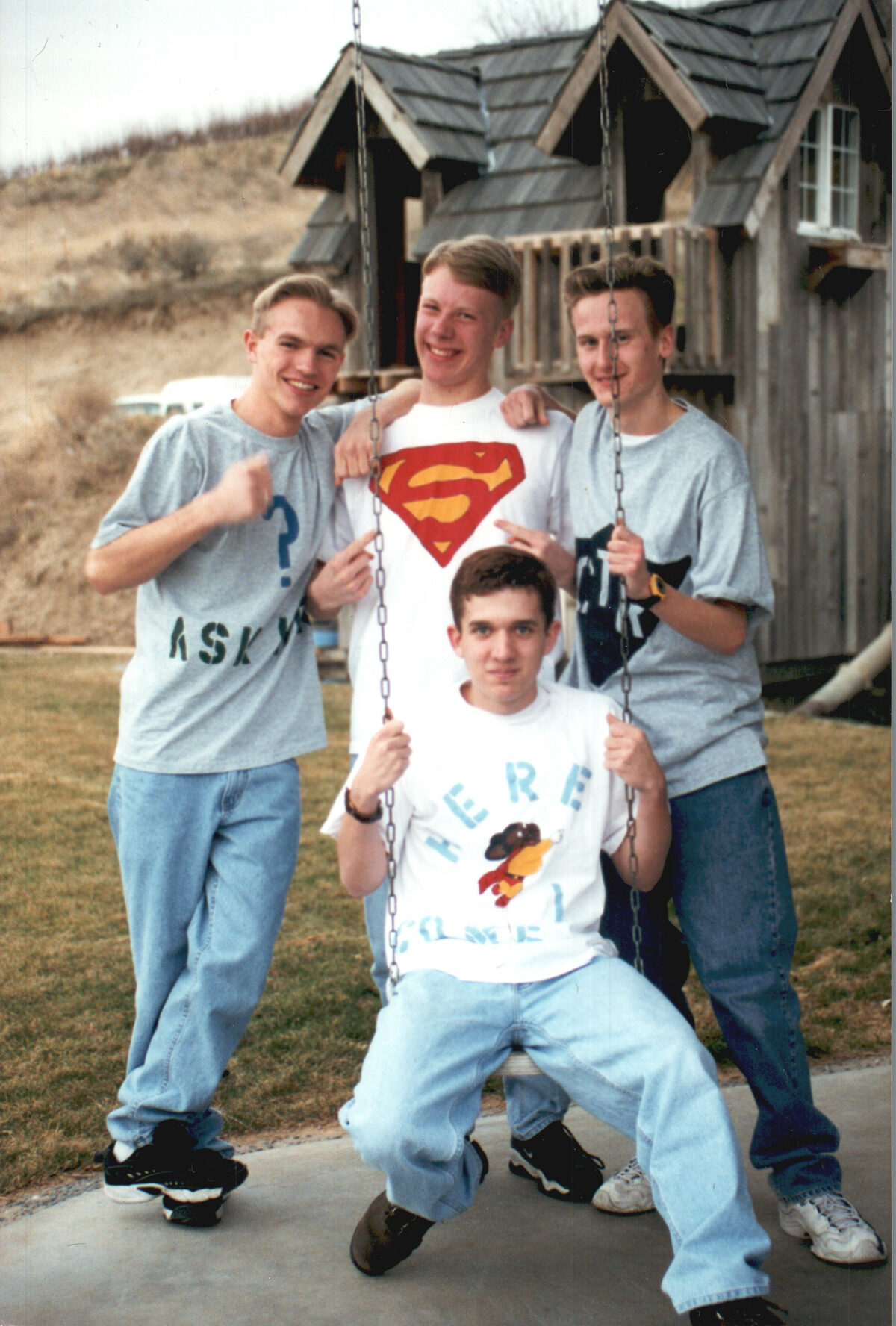
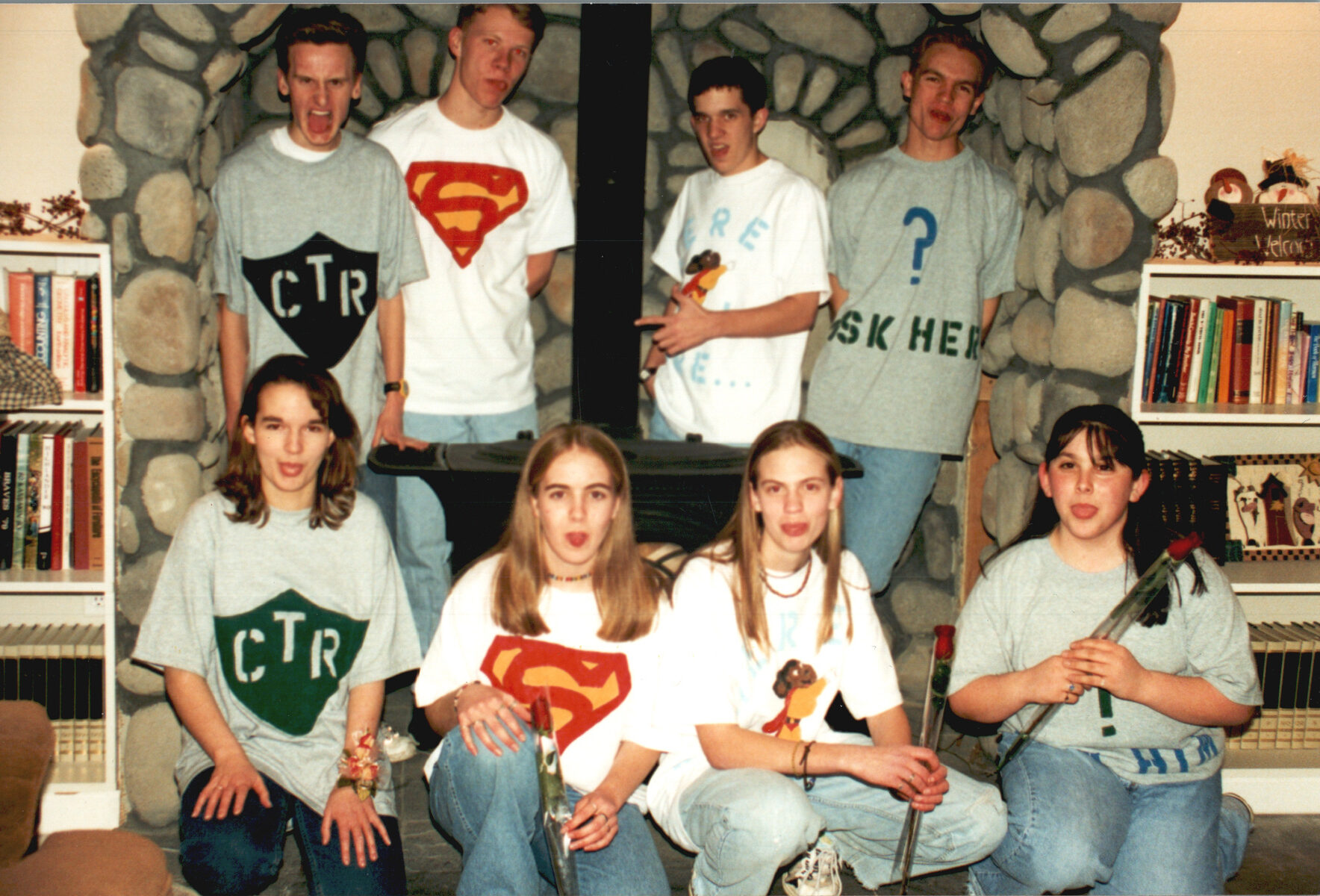
    I spent a week scanning a suitcase full of photos from high school, and here I give every photo I found with Chris-Chud (as I’ve sometimes called him) in it. I also give selections from my journals which relate to my lifelong friend.

    This followed directly after the week I spent in tears.

    In my Utah life and particularly in my extended wrestle with (and difficulty being open about) doubts about Mormonism, I grew distant from a lot of my friends. I didn’t have enough trust that people could handle my lack of full belief. (Unfortunate in retrospect, but that’s where I was.) I regret not staying closer to Chud, yet was happy to see more of him in recent years, to be more real with him about things than I was growing up. The last time I saw him, maybe a month before his diagnosis, I went with him and his kids to the Museum of Flight in Seattle. We had a good time together, talking about Linux like the old days, just being nerds together, same as it always was. I’m not sure but perhaps he spoke some Klingon as he was wont to do. My eyes fill with tears as I write this. Chris “Chud” Lundgreen was sui generis—like no one else I’ve ever known, or ever will. He will be deeply missed.

    Regarding “Chud”

    I have felt for some time that it is somehow legendary for Chud to go by the name Chud. I’ve tended to call him Chris-Chud lately to highlight that. I’m not sure why it highlights that; it just feels like it does. I guess it feels like he was too much person to have just one first name.

    But what even is a chud, anyhow?

    Chris Lundgreen is the only person I’ve ever known to go by the name Chud. And yet, in 2025, I hear the word “chud” regularly, a seeming riff on “Chad“. But Chris’s “Chud” has a different origin, though in same ways similar to contemporary usage. That is a story for others to tell: the Lundgreen family are the proper experts on the topic, and his earlier friends who gave him the name, and Chud himself were he somehow, miraculously, to pull through. (As I write, he’s not doing well.)

    My contribution then is simply to highlight that the Wikipedia article about certain Balto-Finnic peoples called Chud is a good read:

    Folk etymology derives the word [chud] from Old East Slavic language (chuzhoi, ‘foreign’; or chudnoi ‘odd’; or chud ‘weird’), or alternatively from chudnyi, wonderful, miraculous, excellent, attractive….

    In the mytho-poetical tradition of the Komi, the word chud can also designate Komi heroes and heathens; Old Believers; another people different from the Komi; or robbers—the latter two are the typical legends in Sámi folklore. In fact, the legends about Chuds (Čuđit) cover a large area in northern Europe from Scandinavia to the Urals, bounded by Lake Ladoga in the south, the northern and eastern districts of the Vologda province, and passing by the Kirov region, further into Komi-Permyak Okrug. It has from this area spread to Trans-Ural region through mediation of migrants from European North.

    Chud has become a swear word in the Arkhangelsk region. As late as 1920, people of that region used legends of the Chuds to scare small naughty children.

    Journal entries

    These are selections from the first volume of my journals which mention Chris-Chud. Not what I would have hoped for but it brings the time and place of adolescence to life.

    Wednesday, August 27, 1997—First day of School

    Today was my first day of high school. It’s not as much of an adjustment as I thought (so far) and it’s not nearly as scary as it seemed after the incoming freshmen orientation. I started out by going to zero-hour Jazz Band. We basically talked and then listened to “Turkish Bath” for about 10 minutes. Tomorrow we’ll play some music. In Cross-Training I am one of five boys in our class. The others are Brett, Randy, John, and Chris, from Colorado. Jessie, Heather, and a lot of other girls I know are in that class.

    I have World Geog. with Colin, James, David Ostler, Kevin Anderson, Claire, Shannon Rhodes.

    Michelle Gale, Brett Mower, Colin McDaniel, Colin Thorndyke, Alex, and I all have
    English together.

    Bro. Elms is my seminary teacher. Colin, Clayton, Spencer, Jeff Craig, Jason Barton, Greg Moody, and Ben Forsyth are in that class.

    In Algebra, I’m with Ben, Chris Moore, and Megan Moody. Andy Beck, Chuck Allison and tons of people from band are in there, too. Also John Pratt.

    This could work out to be a great year.

    Thursday, August 28, 1997

    Today I found out that the Chris kid in PE is going to be in 11th ward. I didn’t even know he was a church member! This means all 5 guys in our class are members. [The cross-training guys were all Mormons!]

    Tuesday, September 23, 1997

    I’m trying to think of what interesting things happened today…. The person
    named Chris in my PE class is Chris Lundgreen. I didn’t know his last name until
    today. I’m not quite sure he’s found a niche yet at Kamiakin. At dances he hangs
    around our group a lot but doesn’t do a lot of actual talking. Hmm….

    Saturday, October 25, 1997

    … After band, I came home, cleaned my room a bit and did some work, and then I got a phone call. It was Chris Lundgreen wanting to carpool to the church dance….

    Monday, October 18, 1999

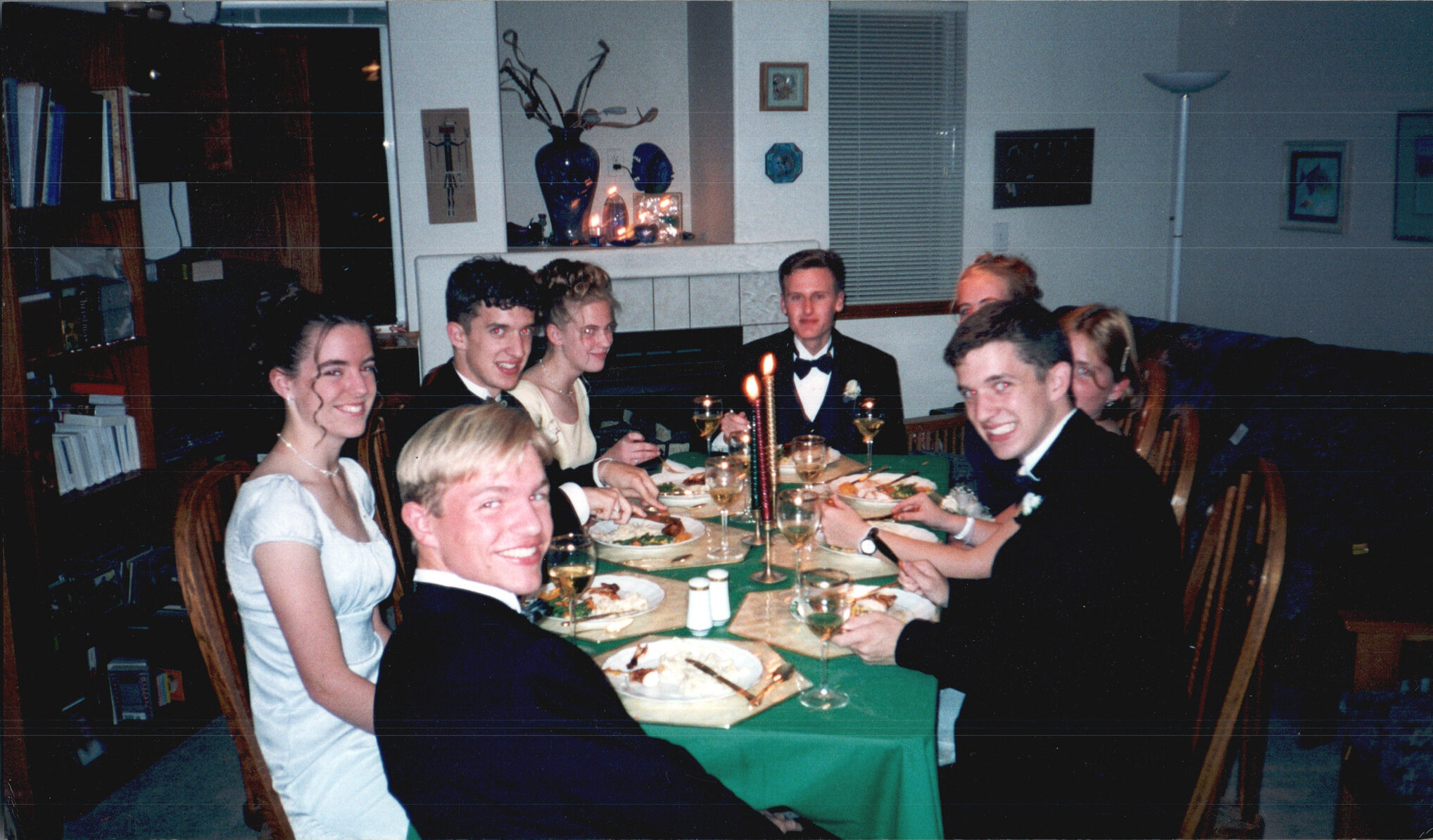
    On Saturday I took Megan Moody on a date. Homecoming, to be specific. We were with Michelle, Tammy, Lies (Megan’s foreign exchange student), Ben, Brandon, and Chris Lundgreen. We played “Two Truths and a Lie” at the Wilson’s house, and then we went to Columbia Park and finger-painted portraits of our dates.

    Then we got dressed, etc.

    After forgetting the corsage at my house, I finally picked up Megan and Lies (with Brandon.) We took pictures at everyone’s houses, etc. and finally ate dinner at the Lundgreens’. Everyone looked pretty awesome!

    We went to the dance, which was the most horrible, sleezy, immoral thing I’ve
    ever seen. Just don’t ask…

    After that we attempted to T.P. Keith Walker’s house, with only partial success,
    then we took the girls home….

    Wednesday, June 14, 2000

    Well, two weekends ago on Friday night at Chris’s house, John Wolfgramm broke my collarbone while we were beginning a wrestling match on the Lundgreens’ back lawn.

    Shock, emergency room, x-rays, pain medication, a blessing by Dad and Brother
    Lundgreen. It was quite a night.

    I was equipped with a shoulder-immobilizing sling so that my fractured left clavacle [sic] can heal. Teresa brought me flowers (Daisies) and Chris and his fam visited. I was unable to work Baskin Robbins and have not yet returned….

    Thursday, July 5, 2001

    … Another weird portion of my dream was that I drove by the Wolfgramms’ house and John and Chris Lundgreen were on the lawn being goofy (although neither of them is in the Tri-Cities right now).

    Sunday, May 12, 2002

    • Things I prayed about tonight:
      Should I go ahead with getting the tooth removed? [I have an extra tooth in my nasal cavity.]
      “It will be alright.”
    • Is it thy will for me to go on a mission at this time?
      The feeling I received was a warm confirmation that the Savior Jesus Christ will call me to the place he wishes me to serve at. In other words, “Yes”.

    In my heart I feel and know that the Gospel is true, the Book of Mormon is true.
    My mind may see things differently, but I can feel the warmth of the love of God
    strongly, and submit my intellect to trust my heart.

    Also, Brother Rosewood mentioned that he had dinner with Chris Lundgreen’s
    dad….

    Photos

    I scanned around 1300 photos that had been gathering dust in an old suitcase for about 20 years. They’re basically all from high school. These are the photos which the face detection algorithm determined portray Chudders. Apparently we went to a lot of formal dances, and little else! [Where is GoldenEye??] Some of these photos align with the journal entries. Chud Lundgreen, you’re uniquest of the unique—one who doesn’t apologize for being fully himself every minute; the only, and most wonderful, Chud we know.

    A leader is judged not by the length of his reign but by the decisions he makes.

    —Klingon proverb

    Update: On the morning of June 25th, 2025, our friend passed away. He will be dearly missed.

  • Where I’m at with Mormonism: a ramble

    Where I’m at with Mormonism: a ramble

    I haven’t talked much if at all about the LDS church on my blog since ceasing my participation with it. I have kept waiting for the right time to do a grand update to explore all the nuances and really do such a massive change justice. But really, if I ever wrote that, it wouldn’t be a blog post, but rather a book. So, barring that, I’m going to just start giving some updates on where I’m at with things now, and while that might not give all the desired details and background, it will at least keep you (and me) from falling farther behind!

    For those just getting up to speed, I realize some of how I think about the church right now may be a bit inflammatory. It’s not my intention to offend: I am simply trying to be forthright with my views.

    15 Jun 2013, Utah – I was 30, just finished grad school, and Dad was dying of ALS.

    In 2015 and 2016, after 35 years of doing so, I stopped attending the LDS church every week.

    I was the go-every-week type, because we were a go-every-week family growing up. Physical illness being the only justifiable exception really; yes, we went to church even on vacation.

    So to stop going every week—that was something.

    It had to do with many things, but the immediate causes were:

    1. my dad’s death in 2014
    2. “aging out” of the YSA wards, and finding the “family” ward uninspiring; and
    3. the 2015 policy to excommunicate for same-sex marriage, and prevent baptism of children of same-sex couples, unless the children renounced their parents’ relationship.

    In 2019, not long after that policy was rescinded, I stopped attending at all, except on rare occasion for a family member’s mission farewell or whatever.

    I grew up in the church, went to BYU, but never managed to “get” the testimony I craved since I was a teenager, and which was promised to me not once, not twice, but three times in my patriarchal blessing. I read the Book of Mormon over and over, and prayed about it, and prayed some more. I had some times of feeling nice feelings about it, of believing it was true. But nothing was enough to convince me long-term. Not in the face of the many and varied critical arguments against church teachings, which I was increasingly familiar with not from the source, but from the so-called rebuttals from apologetics organizations like FARMS, FAIR, and the Interpreter.

    I had doubted since I was 15, when my Baptist friends gave me criticisms of Mormonism that I couldn’t counter. On top of that were ideas from secular sources which, while not specific to Mormonism, gave me access to an alternative, not-necessarily-supernatural worldview; for example, learning in American History class of the theory that the Salem Witch Trials were explained not by witches practicing supernatural witchcraft1As I believed; after all, I was taught that evil spirits were real. but by the population unwittingly consuming ergot fungus, and having hallucinations.

    There was nothing that ever got me to feeling settled about it. In retrospect, though I could get myself to testify of its truthfulness in bursts of zeal and emotion, there was always a feeling of things being unsure. I wasn’t convinced. Yes, it seemed more likely to me that Joseph Smith was a prophet as I’d been taught, but there was enough likelihood that he wasn’t that I couldn’t really be done with it. The question was always there in the back of my mind.

    Over time, more or less against my will, my critical faculties grew. Literature classes at BYU. Probability theory in grad school. A book about Communism that taught me about systems of totalitarian control. And the flip side of all those apologetic arguments.

    Another book that I think contributed was Elder F. Enzio Busche’s book Yearning for the Living God.

    Top 3 books, ranked by number of times I’ve read them:

    1. The Book of Mormon (12 times? 14 times? Something ridiculous….)
    2. The Hobbit (8 times?)
    3. Yearning for the Living God (3 times?)
      The Lord of the Rings (also 3 times)

    Yearning for the Living God had a very different approach to Mormonism than what I was used to. It was built more around personal “miraculous” experiences and God’s love than around church authority, the priesthood, etc.

    The discussion of how the German people succumbed to Nazism was also eye-opening: how it could seem so wonderful to so many of them, and yet be so deeply wrong.

    As a last digression before I get to the point: the church, in my experience, was (and perhaps still is) religiously and spiritually totalitarian. If you did it the way the church told you to, you’d give everything to it. Quite explicitly. In my view the pattern was set by how Hiram Page was dealt with early on when he claimed revelations through a seer stone, the same method of revelation that Joseph Smith used. The resolution was for Joseph Smith to receive his own revelation proclaiming Hiram’s to be satanic, and also, reportedly, to grind Hiram Page’s seer stone to powder. This respected an implied principle: that the authority of the center is supreme to the authority of the individual. That was my experience, too—even to the point that we were encouraged to deny our own direct experience. How many times was I told, as a doubter, that I actually really did “know” that it was true? And to testify that I knew, when I didn’t? At the church’s urging I rejected my own sense of the truthfulness (or lack) of the church, and for twenty years I fought against my doubts, which were real perceptions of mine that I was taught to hate.

    Okay, now the point is to give a bit about where I’m at with Mormonism:

    I listened recently to John Dehlin’s interview on a podcast apparently called The Cross Examiner (1 and 2). The Mormon Stories podcast back in the day was an important window for me to a wider world of Mormonism and the world at large. It was more interesting than church which was a big part of why I couldn’t look away. So it was also interesting to hear John Dehlin tell his own story after hearing him interview so many others. And a lot of it I really relate to and admire. Yet I was left this time with the conclusion that nowadays John Dehlin’s approach is not truth-oriented, but polemical. It isn’t so different from the apologists I used to read. There is often truth in it. But truth isn’t at the forefront. It’s what will rile up the base and motivate subscribers. That was my perception.

    In other Mormony news, I finally got around to reading Early Mormonism and the Magic Worldview. It’s a bit of a slog but worth it, at least for me. The hypothesis that Joseph Smith drew his ideas not from a direct channel with God but from his environment is a strong one, and exploring in depth the (likely) contributions of folk magic to Mormon doctrine was fascinating. It’s led me to this dictum:

    The degree to which we regard Joseph Smith as a prophet is the degree to which we are ignorant of 19th century America. And the degree to which we come to understand 19th century America is the degree to which we come to understand Joseph Smith, who was inescapably and entirely a product of his environment.

    A last thought: in dealing with the truth claims of Mormonism, and also with stuff generally, I think it’s important to distinguish different senses of the word “just”. Here are three:

    1. Just as in fair, good, and righteous: “Noah was a just man.”

    2. Just as in something recently done: “I just wrote this sentence.”

    3. Reductive just, by which a phenomenon is regarded as fully explained by another thing: “Temperature is just the average kinetic energy of subatomic particles.”

    Reductive just is rampant when people argue. Sometimes it’s valid, but often it’s not. It’s frequently a means of feeling justified (is that a pun?) disregarding somebody else’s position, or their entire worldview.

    “The feeling of the Holy Ghost is just elevation emotion,” for example. This is commonly stated in ex-Mormon / post-Mormon spaces.

    Of course, the feeling of the “burning in the bosom” really is classic elevation emotion. But it doesn’t fully reduce to that, because elevation emotion itself isn’t just elevation emotion. Elevation emotion is elevation emotion, with all that that implies. Why is it, anyway, that we have such an emotion? Why would it have evolved? What does it even mean to have emotions in the first place? What is subjective experience? How could subjective experience have evolved? What would be the survival advantage of it? How can we say that the Holy Ghost is “just” a bunch of things that we don’t fully understand? How is it a reduction to replace one unknown with another?

    It’s not that I don’t think it’s valid to say “this reduces to that.” It just doesn’t always say as much as we think it does, or get us nearly as far in explaining a thing as we might wish, even if it did make some kind of progress.

    It is comforting, I suppose, to believe we have fully explained a thing. And sometimes, I suppose, we have. But not as often as we like to think.

    May 2024 – at Johnston Canyon, Banff

  • Prof. Mark Davies’ ouster at BYU

    Mark Davies was a professor of linguistics at BYU who created tools for analyzing large collections of text, a method known as corpus analysis. He ran a website, corpus.byu.edu, where these text collections were available for anyone to use.

    The site, now at english-corpora.org, and Dr. Davies’ website, describe a process of administrator mismanagement that led to Dr. Davies’ departure in 2020, along with the corpus project and website. See here and here.

    I did my B.A. in linguistics at BYU, and remember watching with interest as the the corpus page developed. It’s disheartening to see that such a valuable academic resource doesn’t have a permanent home at BYU.

    Removing the name-naming text and links, I will quote thus:

    This permanent loss of funding support was a punitive action … after Mark informed the university of serious “financial malfeasance” by the College of Humanities regarding income from the English corpora. Subsequently, administrators at BYU refused to help resolve the issue, which is part of a culture of ignoring whistleblowers and “closing ranks” and promoting “yes men” at BYU.

    It is not overly surprising that BYU would pay such little attention to academic productivity, since the primary mission of BYU is religious in nature, rather than academic. In certain respects, BYU is more like a religious seminary than an actual university. As a result, some people at BYU don’t really understand how to support and protect projects that have real academic importance and significance.

    Of course, there are two (or more) sides to every story. Part of why I unlink the specific callouts is that I have no way of knowing beyond Dr. Davies’ own words.

    But the critique leveled against the university rings true for me. I’ve long since come to feel that BYU did me a disservice by shielding me from critical information about the LDS church, which was not at that time covered in any of the many religion classes I took, or any other class for that matter. It seems unconscionable to have so many professors of such high qualification, and none mention any potential issues with the church they represent, except obliquely, after hours.

    “The glory of God is intelligence; or, in other words, light and truth” – it was all over campus. But the glaring exception is casting light on, and discussing the truth about, the church itself.

    EDIT: The word “ousted” may be too strong – Dr. Davies chose to retire, but the withdrawal of funding was strong pressure on him to do so.

    NOTE: I originally posted this on Reddit, check the discussion there, including a response by Dr. Davies, also seen on his blog.